
Sitting down, Jesus called the Twelve and said, “Anyone who wants to be first must be the very last, and the servant of all.”
He took a little child whom he placed among them. Taking the child in his arms, he said to them, 37 “Whoever welcomes one of these little children in my name welcomes me; and whoever welcomes me does not welcome me but the one who sent me.”
— Mark 9: 35-36

Welcome to Issue #100 of the Lectio Letter. This members-only newsletter is filled with music, film and food suggestions, links, and an article written by yours truly. If you happen to be new here, there’s a whole 99 other issues you can explore here!
In this 100th issue, I’m reflecting on what I’ve learnt giving “Bible talks” to groups of children. As I reflect on in the article, I am constantly hamstrung by the nuances of theology and talking about those realities in ways that are simple and faithful. Whether or not you end up giving children talks, I hope there is something that reminds you of how important your role can be in a Child’s life is.
PSA: This email is LONG and due to some obscure technical reasons on Gmail it gets ‘clipped’, which means you are not seeing the whole thing.

You can see at the bottom of the email if it says “message clipped”, then click “View entire message” to see it all.

You are not getting it all if you don’t see my signature at the bottom
Status Board
Reading
Everything is Never Enough by Bobbie Jamieson

I began reading Everything Is Never Enough by Bobby Jamieson recently, and I was hooked. It’s a book that unpacks the biblical book of Ecclesiastes. I don’t know if you’ve ever chosen to read that book? Maybe as part of one of those “Bible in a year” approaches, but few people turn to it when they’re seeking their garden-variety biblical inspiration. And yet, if you’ve ever received a prophetic word that included a verse from Ecclesiastes, tell your story in the comments.
This book is lyrically written, remaining clear and contemporary in the best way. Jamieson begins by giving readers a way to approach what, to modern ears, can sound like a series of strange and seemingly counterintuitive phrases that make up Ecclesiastes. That alone would have been enough, but when I realised that Jamieson was going to include Hartmut Rosa as a modern interlocutor, I was sold.
I had been led to Rosa through Andrew Root’s The Congregation in a Secular Age, and I’ve found Rosa’s self-aware, atheistic critical theory, particularly his work on busyness, alienation, emptiness, and resonance to be about as compelling a contemporary hamartiology as there is outside the Bible.
Once I wrap it up, I’ll hopefully get the chance to reflect a little more in the upcoming “All the Books I Read in 2025” Lectio coming soon.
Can these Bones Live by Robert Jenson

A few months ago, I delivered a series of lectures to some young Christians titled “The Nature and Character of God.” Throughout Christian history, there have been extended philosophical and abstract reflections on a series of attributes considered important for defining God (the “omnis,” and so on). Yet this is not how God has chosen to reveal himself in Scripture or in the person of Jesus.
So I designed the talks to survey the biblical story in such a way that God’s character is revealed within the context of a narrative—one that repeatedly challenges many of our assumptions about what is true and, in turn, claims our very lives as the place where these truths are worked out.
As I was reflecting on this approach with a friend over WhatsApp, he said, “That sounds very much like what Jenson was doing in his book “Can These Bones Live?”
I had heard of Jenson and knew he was influenced by Karl Barth, but I hadn’t read anything further. He passed away in 2008, and this book was published a couple of years before that. It is a lightly edited transcription of an undergraduate introductory course in theology given at Princeton Theological Seminary, and I devoured half of it in one sitting. It is extremely readable, and you really get a sense that he is playfully engaging in summarising vast amounts of learning in an accessible way. Indeed, in the introduction, the teaching assistant who compiled the lectures remarks that Jenson worked from minimal notes and spoke largely extemporaneously.
The essential motif, taken from the title of the course, is the question spoken to the prophet Ezekiel: “Son of man, can these bones live?” Jenson uses this question to frame a journey through the classic themes of Christian theology, centring on what it means to live, and what it means to be a people liberated from death through the—unique among religions—centrepiece of Christian conviction: the resurrection. This question of whether God’s life can inhabit and resurrect human life runs throughout Israel’s story and into our contemporary context, shaping both the life of the church and the task of Christian theology.
Eating
Chicken Tinga

We were tasked with preparing a Mexican meal for about 12 people attending our house group last week. Rather than barbecuing Mexican dry-rubbed chicken breasts, I decided to try making the chicken go further by creating an adobo-based sauce. I used this recipe on Serious Eats as the basis for the idea and quadrupled it.
Unlike the adapted recipe that I’ve put below, I transferred the shredded chicken and sauce into a slow cooker, as I had made it earlier in the day and thought it would allow the flavors to meld together.
While it turned out delicious, it was probably more saucey than is good for placing in wraps. I have therefore, removed the slow cooker from the process, as its lid simply retains all the moisture; good for the chicken, but not ideal for reducing the sauce. Next time, as mentioned below, I would simmer off the liquid until the sauce is much thicker.
Ingredients
2kg chicken breasts
Salt and freshly ground black pepper
8 tbsp Oil
1kg Beef tomatoes + 2–3 tbsp lime juice or cider vinegar (this is to include the acidity which would be present if I could use 50% tomatillos)
1 Bulb of garlic cloves, peeled
3 small white onions, finely chopped
8 tsp dried oregano
8 bay leaves
120 ml cider vinegar
1.9 L chicken stock
2 chipotle chiles and 1tbsp of adobo sauce
Process
Brown the chicken
Season chicken generously with salt and pepper. Heat the oil in a large heavy pot or Dutch oven over medium-high heat. Add chicken and cook without moving until deeply browned, 6–8 minutes. Flip and cook 2 minutes more. Remove chicken and set aside.
Char the vegetables
Add tomatoes, and whole peeled garlic cloves to the same pot. Cook, turning occasionally, until blistered and lightly charred in spots, about 5 minutes.
Build the sauce base
Add chopped onions and cook until softened, about 2 minutes. Stir in oregano and bay leaves and cook until fragrant, about 30 seconds. Add cider vinegar and chicken stock, scraping up any browned bits.
Simmer the chicken
Return chicken to the pot. Bring to a boil, then reduce to a gentle simmer. Cover and cook, turning chicken occasionally, until cooked through (about 20–30 minutes).
Shred the chicken
Remove chicken from the pot. Discard skin and bones, then shred the meat with two forks.
Reduce and blend the sauce
Increase heat and simmer the sauce until reduced by about half, 5–10 minutes. Remove and discard bay leaves. Add chipotle chiles and some adobo sauce, then blend until smooth using an stick blender or countertop blender.
Finish the tinga
Return shredded chicken to the pot and stir to coat. Simmer uncovered until the sauce thickens and clings to the chicken. Season with salt, pepper, and additional vinegar or lime juice to taste.
Listening
Some lovely acoustic guitar sounds in the wild.
Soulish Jazz sounds from Les Dunes
Sudan Archives Strings and Africa
A Journey into the past with Lauryn Hill’s Unplugged Performance
The Children’s Talk That Took Me 23 Years to Write
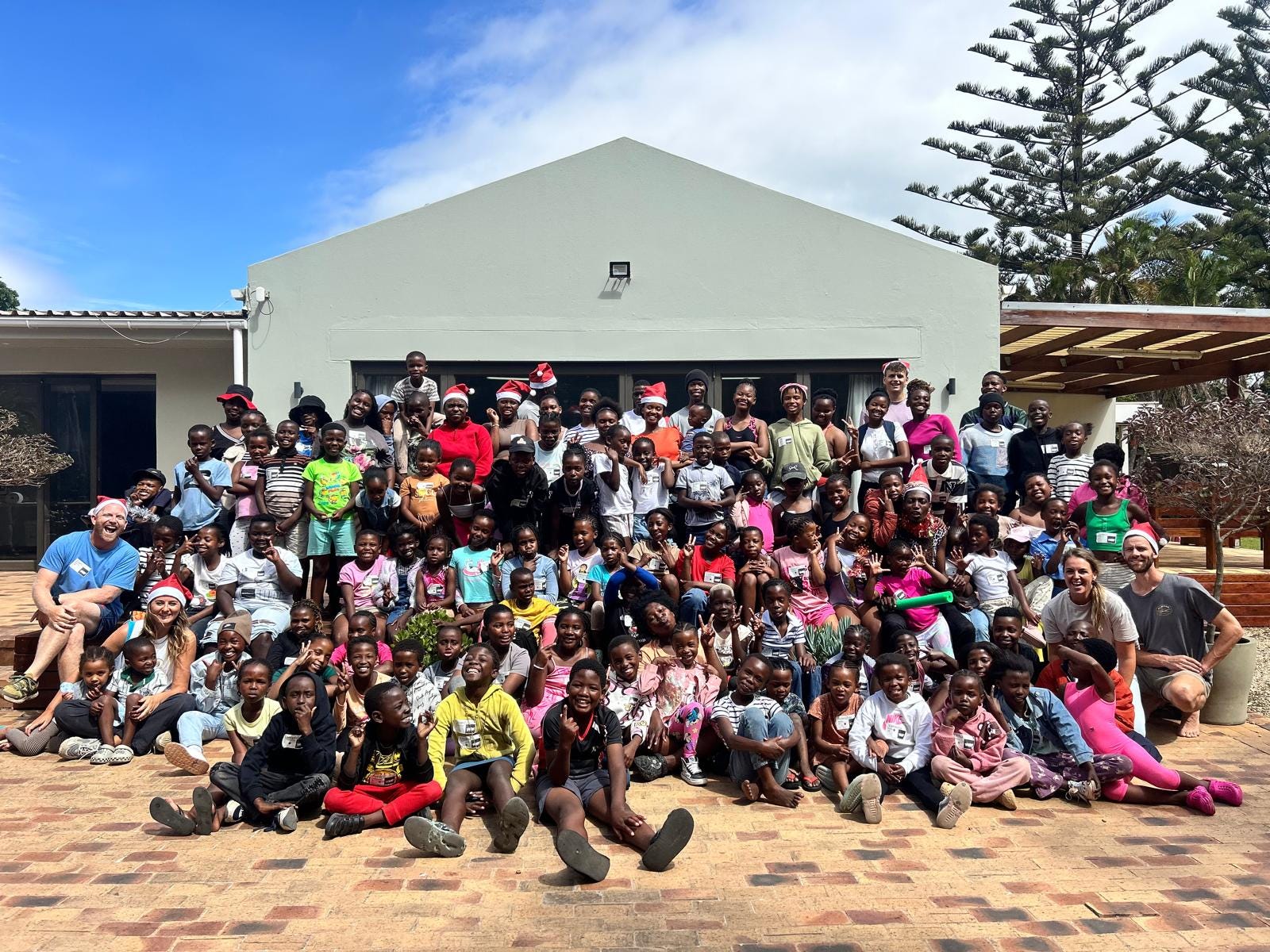
Last week I wrote a pre-Christmas talk for about 110 children who live in the township of Masiphumelele.
Communicating the deep truths of the Christian faith to children between 6-11 is, in my opinion, one of the hardest public speaking gigs you can find. I’m communicating to them in their second language, I’m trying to get their attention after hours of hyper activity at a Christmas party and they are falling into a food coma after we fed them an amount of hotdogs that were, per person, equal to the weight of their overstuffed school bags.
But I have an even bigger problem. I’m kind of a theology nerd.
In the pre-modern world people who were educated in theology were considered “doctors”. They were educated not just so that they could thread a theological camel through the eye of an abstract philosophical needle. They were educated to serve and heal the church. Because ever since Genesis 3 there has been a broken way of approaching knowing and learning lurking around like a poisonous gas that has gotten inside of us.
If you ever have the chance to study the heresies that rose up within the early church you’ll be surprised. Heresies were not made up out of an explicitly evil desire to corrupt the church.
Most of the heresies existed through well intentioned people ministering to congregations and they were attempting to make simple and understandable the foundational realities of Christian faith. The heresies arose because they made them too simple.
They were trying to reach for explanations of how Jesus was fully human and fully divine. How is God as three persons, the Trinity was also the One God of the Hebrew bible?
One thing you learn when studying heresies is that anybody who simply proceeds with their human logic to make these realities simple will end up in some form of heresy.
Instead the church often developed what, at face value, seem like positions that are logical contradictions. They went on to make the explanations as coherent as they could while remaining true to the testimony of the scriptures.
Then they simply demanded that we would fall to our knees in worship. Caught up, as we are, by the spirit into Christ and wonder at the mystery that is greater than we are.
So how does all of this relate to a children’s talk?
Well, I have found myself over the years in, what I now suspect to be, a divinely-engineered tension. I study theology and I get to give Childrens talks.
In the diverse and wonderfully gifted team that we do our children’s and youth work with here, when it comes time to “give a talk” eyes often turn to me (I should mention here that a couple of my coworkers have made valiant and brave attempts to do what I’ve already described as the most terrifying public speaking gig of all time-- to hold the attention of primary school children!).
So I sit down to write something simple. But all the while the development of doctrines and the ditches of heresies along the orthodox road crop up in my mind as I search for simple Christian phrases that shorthand the tapestry of Christian belief.
When I’m teaching theology to adults I’m often trying to explain the ditches and why you often need to clarify something like an explanation of what Jesus’ death accomplished by guarding against heresies.
Those tortured phrases come across something like; “but not that, and not, not that but that.” . This kind of convoluted response, maps on beautifully to the common expectation that theologians are simply making something most people listening have known all their lives more complicated than they think it needs to be.
A theologians response might have the virtue of nuance but it also has the vice of containing so many caveats that the attention span of listeners inevitably fail to perceive any discernible answer to their initial question. And I empathise.
So you can imagine my dilemma as I sit down to try and write something faithful, engaging and simple for 6 to 12-year-olds who are listening in their second language!
Over the years of trying to do this I have come across a few principles that have grounded how I’ve written these talks that you might find useful.
Hopefully from reading so far, you have picked up that anyone who knows me, knows that I am probably one of the last people someone would nominate or expect to be a “children’s worker”. So I am not claiming the expertise of a natural but rather some of the hard-won perspectives from a person who will in all likely remain a beginner and yet sincere amateur at communicating with children.
1. Kids are made for love
The chief qualifications for someone working with children is that you are present, engaged, safe and interested. Which is a longer way of saying, you are committed to loving them in the moment in a clear and obvious way.
This is probably true of any child on earth and yet it’s particularly true for where we work. The vast majority of the children we work with are perpetually traumatised.
Many of their parents are addicts and the children raise themselves. Those who have functioning parental figures are on their own from the end of school until their parent return home from, often exploitative, working conditions.
Kids love safe, loving boundaried attention. You don’t have to be a clown, you just have to be there, affirming their worth with your attention. Calling them by name, looking them in the eye, and assuring them someone cares for them.
2. Understanding develops over time and development stages are significant
Studies in neuroscience reveal that our concept of God is mapped onto mental architecture that begins to be formed through our relationship with our primary caregiver.
When a small brain can’t yet see, feel or attest to the presence of God, God has designed them to know, for an interim time, the care of a loving parent as the placeholder for what in adult life can develop into trust in God. This is technically understood in psychology as secure attachment.
Of course, for a variety of reasons, people develop a disordered relationship with their primary caregiver. In fact, post-Genesis 3, we know through experience that even the best intentioined care givers fail to image God faithfully to us.
But what is crucial about this developmental period is that unhealthy attachment patterns of relating can be re-wired through positive, healthy relationships with other consistent present adults. These redemptive people as a consistent faithful presence in the lives of children help create reinforce pathways of trust and goodness.
I say all of that to say, that much children’s ministry talks focus on morality rather than theology. We look at Jonah and see a lesson that we should listen to God or bad things might happen rather than seeing a God who is relentless in loving pursuit of even the worst of humanity.
But the way the child’s brain develops needs information and experience of what God is like in order for christianity to be more than a behaviour management system.
I understand the motivations here. Children are literal and moral actions like, “be grateful, or generous or love people” are easy things for them to compute, while painting a picture of God in Jesus can feel convoluted, complicated, and abstract.
But If we only preach a children’s gospel about living up to a moral standard we either create ‘good’ people who have no sense of a need for Jesus (see Pelagius), or ‘bad’ people who know they have fallen short and so are assured that God will have nothing to do with them (See the Woman caught in Adultery).
What we need to do in these early stages of childhood, especially for those in troubled and traumatised contexts is to assure them that whatever they have heard about God; he is good, he is loving and he is relentless in coming close to those who have failed, fallen short, felt lost, broken or ashamed. That is the good news.
So while we have rules in our club about how to treat one another, what is and what is not acceptable, we make sure to communicate that we don’t do that in order to qualify for belonging, but we do it as an expression of what God is like and what he does for each of us.
Childrens talks should be theology; ie. about God before they are about morality.
3. Repetition, engagement and attention spans
Those who know me will know that being concise is not my strong suit. But a as a general rule, I try to imagine what I think the attention span of the children I’m going to speak to is and then half it. Then I’m still likely to be pushing their limits by the end.
The second thing that has become clear to me is the power of repetition. While the classic sermon outline training encourages 3 main points, childrens talks need only one. Anytime I’ve naively deviated from this, it has fallen flat.
Next you have to craft that point into a repeatable statement that crops up again and again through the story which reinforces the point you want them to remember.
Finally, I’ve learnt that you don’t have to do it all in one go. One of great privileges of our work is that at least once a week we get to look into the face of over 100 children, say their name and tell them that we are glad they are here.
Then each week, we try to add one simple thread in the tapestry of their understanding of God’s story. Trusting that over time, it might form a fabric of faith that surrounds them in the midst of their troubled childhood and carries them into adulthood.
Theology may require precision, but Christian teaching and ministry requires presence--a heart willing to sit in mystery while offering the simplest truths with clarity and compassion.
It’s taken me 23 years of Christian Faith to figure out to begin to do this and I’m still a beginner. But as I keep stumbling my way through these talks, I’m learning that the task isn’t to compress the infinite into something small, but to open a small window through which the infinite beauty of God in Christ can shine. This happens in words, but at least as powerfully it happens through faithful presence. And somehow, that has become one of the holiest parts of our work.
So here’s the Talk
The hastily written childrens talk that took me 23 years to be able to write and a video of me attempting to keep their attention is available below to paid subscribers
I tried to link the core disconnection in the garden of Eden, the story of Israel and the way that Jesus’ makes visible and real the God who has pursued broken humanity from the beginning. You’ll see I reference many aspects of the birth and childhood narrative to make connections that God is close to their lived experience. The experience of poverty (Shepherds), unexpected pregnancy (Mary), Xenophobic relations in South Africa (3 Wise men), Violence and Riots (Murder of the Innocents), Schooling (Luke 2:52), Unemployment (transition from carpentry to ministry), Sickness (healings), False Accusation (Trial) and Death (crucifixion and resurrection) are all realities that surround their lives that Jesus’ coming, life, death and resurrection speak to powerfully.
