

“Sometimes, you read a book and it fills you with this weird evangelical zeal, and you become convinced that the shattered world will never be put back together unless and until all living humans read the book.”
― John Green, The Fault in Our Stars
“What really knocks me out is a book that, when you’re all done reading it, you wish the author that wrote it was a terrific friend of yours and you could call him up on the phone whenever you felt like it. That doesn’t happen much, though.”
― J.D. Salinger, The Catcher in the Rye
“′Classic′ - a book which people praise and don’t read.”
― Mark Twain
“You don’t have to burn books to destroy a culture. Just get people to stop reading them.”
― Ray Bradbury

Welcome to Issue #101 of the Lectio Letter. This members-only newsletter is (normally) filled with music, film and food suggestions, links, and an article written by yours truly. But this time it’s my yearly review of (almost) every book I read in 2025 (you can read the previous years; 2020, 2021, 2022, 2023, and 2024 here).
On the Significance of Reading Words

In the founding story of the Bible in Genesis the world comes to be, not through a cosmic war or great constructive effort, but through a word.
Words create creation, and then this creative wording task is, in part, entrusted to humans, made, as they are, to image God who makes realities with words.
Of course, as the story of the Bible goes on, we see the lack of faithful fulfilment on the part of the humans who are entrusted to represent God. A failure to be, in one sense, a word from God to His creation, and so God comes Himself into the flesh, as the Very Word (Logos) of God.
While some religious systems and spiritualities delight in mystery, Christianity at its heart delights instead in a mystery revealed. That is to say, that something previously inaccessible and opaque has become something said and seen (at least, in part).
I am always amazed at the power of words as they make their entrepreneurial way through the world.
From when I was young I developed a quick tongue, sometimes too quick for its own good. This came partly out of self-protection but also, at times, at the joy of causing others to laugh. But I’ve found out, often enough the truth held in the book of James chapter 3 about the danger of an overactive tongue:
the tongue is a small part of the body, but it makes great boasts. Consider what a great forest is set on fire by a small spark. The tongue also is a fire, a world of evil among the parts of the body.
When I was young one of the only pieces of scripture I somehow committed to memory and eventually prayed often was;
“Set a guard over my mouth O Lord, keep watch over the doors of my lips”
— Psalm 141
it seems now to have been a strangely perceptive necessity.
Words can reach to the deepest parts of our humanity. They can serve to reveal hidden realities of goodness and spaces of belonging and connection.
Just as powerfully, words can also open up wounds of disconnection and pain.
Of course, the spoken word seems most suited to this, but words in books are no small thing. Indeed the miracle of the modern publishing and distribution industry can pass us by. For a moment consider that you and I can readily access books, which quite literally are the thoughts of a person that we, in all likelihood would otherwise never have known.
While in our post-enlightenment imaginations we think of words as toothless ideas to be considered through the well policed gateway of our rationality, the biblical imagination offers a much more lively interpretation of how words work.
Words create realities. They can open up hope or despair, they can heal or they can bind and so while we are rich with access to words, how those words shape us deserve attention.
We live in a world where words are increasingly used with impunity to corrupt and obscure realities, to create fear and preserve power, and maybe we always have. But in the midst of such temptations to dissolution and despair we shouldn’t lose sight of the great gift of living in our age, rich as we are with access to the words of others.
In fact, one of the greatest forms of resistance in an age as contested as ours is to nurture a simple yet unnaïve gratitude that can stir an unsentimental and resilient hope.
As I have remarked in previous years of these reviews, the ability to access and receive perspectives from another person through the words of a book can be a fantastic source of humility as we come to terms with what we don’t know and how much we have left to learn.
In a world so quick to speak and so slow to listen, the patient reception of another’s words, whether it be in a book or in person may be one of the most faithful and transformative acts we have left. And as we seek to read well we just might participate in the same Word-shaped humility through which God has drawn close to redeem and renew us.
Support the Lectio Letter

We are now heading into the 7th Year of the Lectio Letter. I started this newsletter as a creative way to help fund my buying of books that contribute toward the teaching and training we do as a part of the College of Christian Formation within the University of the Nations.
It’s a University with over 200 campus locations around the world which helps equip those engaged in missions and discipleship. In each newsletter is one article written by me, a recipe and music recommendation as well as what I am reading currently alongside a short life update. The first 10 people who sign up with the button below with 50% for the whole year.
Becoming a member supports the work we do, and in return, you get two(ish) articles a month, alongside book, movie, music and recipe recommendations and access to all 100 of the previous issues.
Whether you become a paid subscriber or not, I’m very grateful to each of you who read and respond to this newsletter.
Introduction to the 2025 Book Reviews

Well, This is the sixth annual book review of “(almost) every book I read” (read 2020, 2021, 2022, 2023, and 2024 here). I’ve always been quite traditional and stringent about what I consider reading a book.
Reading it from front to back, marking it, and reflecting on it. In contrast, I own many books that are simply not designed to be read this way, reference books, poetry books, devotionals and the like.
But it seems crazy to claim that the 100’s of books I have flicked through somehow over this year count as books I have actually read. So for now, I’ll stick with my “front to back” criteria and trust I’ll find other ways to share and foreground other just as worthwhile tomes.
Did you read something that you loved this year? Now’s your chance to share it! Let me know in the comments, I love receiving recommendations!
Also, if you are reading in Gmail, this email will likely be clipped due to its length. If you want to read it all, scroll to the bottom and then click “View entire message” or read it online at LectioLetter.com to see it all. You are not getting it all if you don’t see my signature at the bottom.
Top 3 books of 2024
1. Everything is Never Enough by Bobby Jamieson
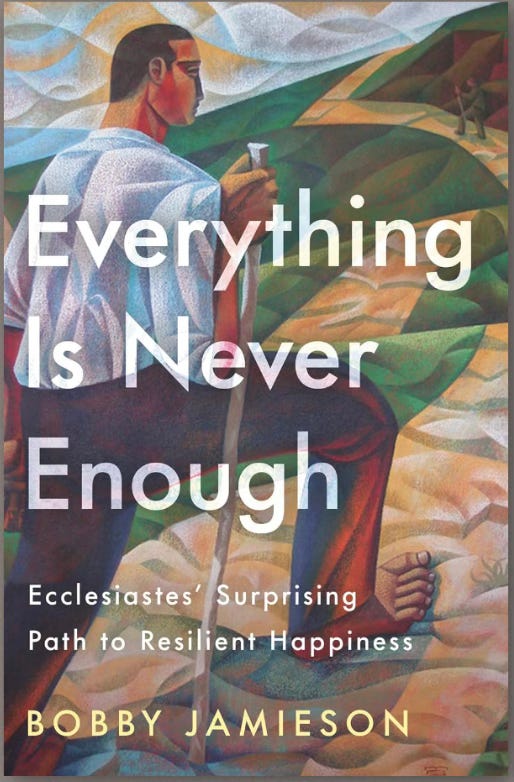
Everything Is Never Enough by Bobby Jamieson was one of the last books I read in 2025. It’s a book that unpacks the biblical book of Ecclesiastes.
I don’t know if you’ve ever chosen to read Ecclesiastes by your own volition? Maybe as part of one of those “Bible in a year” approaches, but few people turn to it when they’re seeking their garden-variety biblical inspiration.
Bobby Jamieson begins the book asking the question, unusually pointed and unreligious; Given the comparable objective goodness in your life, “Shouldn’t you be Happier?”. It’s the kind of gnawing inarticulate knot that exists somewhere in most peoples sleepless nights, but Jamieson reveals how it is in fact a deeply Christian feeling according to Ecclesiastes.
The problem with stuffing the vastness of eternity into the cramped compartment of the human heart is that it doesn’t fit. What God has put inside us guarantees an enduring mismatch between what we want and what this world can give…. The human heart is pierced with a hole that lets in the infinite. That is why all the finite goods that our toil gains fail to satisfy.
The first chapters cover the variety of human experience, as he calls it the ‘first floor’ of the universe; work, sex, food, drink, wealth and power. These, now widely accessible to most of us, at a level reserved for royalty in Qoholet’s (the state author of Ecclesiastes) time. Qoholet does have an abundance of these things are his conclusion is that they don’t satisfy, he has it all and yet it remains absurd, vacuous, empty. But as the author of Ecclesiates ascends to the ‘second floor’ of perspective on these things, he observes that each of these things are very good gifts. They are not empty, they fulfil very important needs in human life and they should be enjoyed. Finally, Qoholet ascends briefly to the ‘top floor’ of reality and his only remark is to simply fear God. Somehow in the abundance of provision that Qoholet has is to be enjoyed but not clung to.
This book is lyrically written, remaining clear and contemporary in the best way. Jamieson begins by giving readers a way to approach what, to modern ears, can sound like a series of strange and seemingly counterintuitive phrases that make up Ecclesiastes. But Jamieson concludes taking up Rosa’s work on resonance, that somehow the longing for infinity that exists in the heart of humans is found through an engagement with the created matter that God has put on in Jesus and that we can receive as a gift. This final point is landed with more precision and poetry that I can do justice to here and I heartily recommend this book to you for just. that reason.
2. The Surprising Genius of Jesus: What the Gospels reveal about the greatest teacher by Peter J Williams
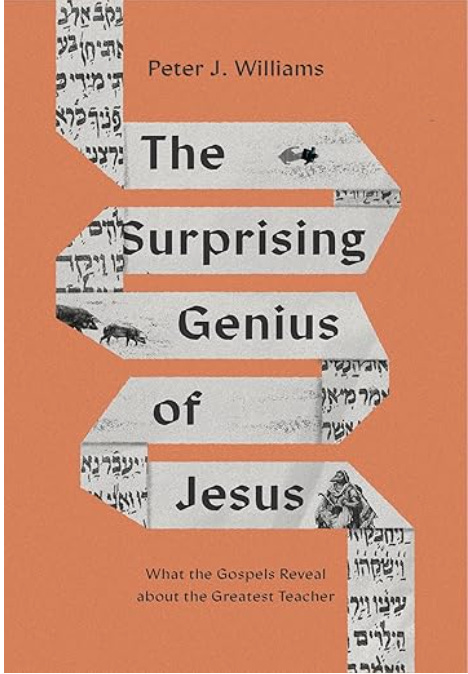
The Surprising Genius of Jesus is a short book, but it is densely packed with insight. Written by Peter J. Williams, my former New Testament professor in Aberdeen and now the principal of Tyndale House in Cambridge, it offers a compelling vision of the intellectual brilliance of Jesus.
Williams’ claim is that through a close reading of the parables attributed to Jesus we see powerful evidence of his extraordinary, integrated intellect.
Jesus was not merely a spiritual teacher who spoke in memorable stories; he was a master communicator whose teaching reveals remarkable depth, coherence, and theological sophistication.
Much of the book focuses on what is commonly called the Parable of the Prodigal Son, though Williams more accurately calls it the Parable of the Two Sons. With careful attention and literary sensitivity, he shows just how much genius is packed into this single story. Far from being a simple moral tale, the parable is a tightly woven narrative filled with echoes, reversals, and scriptural allusions that span the breadth of the Old Testament.
What makes Williams’ explanations even more compelling is that he reveals how Jesus speaks to multiple audiences at once. The parable both comforts and confronts, drawing in the broken while simultaneously unsettling the self-righteous. Different groups in Jesus’ audience, including sinners, Pharisees, and ordinary hearers, would all have found themselves located within the story, challenged by it, and invited to rethink their assumptions about God, grace, and belonging.
Williams shows that Jesus was exquisitely attuned to his listeners. The parable is not only emotionally powerful; it is also theologically rich, summarising Israel’s story of exile, rebellion, and restoration, and bringing it to its climax in Jesus himself.
Williams is a highly esteemed evangelical new testament scholar, yet he writes with clarity and this book is very readable.
3. The Possibility of Prayer: Finding Stillness with God in a Restless World by John Starke
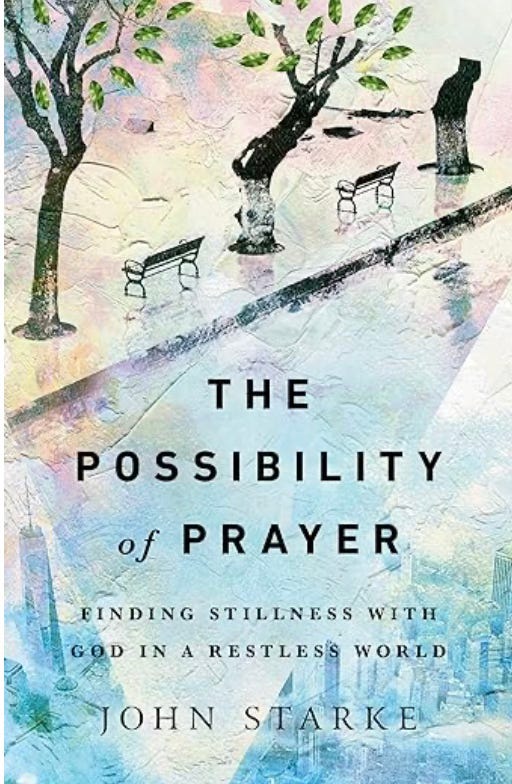
This book has been staring at me from my shelf for a couple of years now and I’m so glad I finally read it because “The Possibility of Prayer” has quickly risen to my “go-to” for an introduction to prayer.
Many of books on a topic as broad and as crucial as prayer gravitate to one of three points in my experience. 1. A Practical how-to that lacks theological reflection or depth, 2. Obscure theological arguments about the mechanics or efficacy of prayer or 3. Mysterious and subjective contemplative reflections on the experience of prayer. But John Starke covers almost all of this ground without being bogged down in any of the usual pitfalls. This book manages to catch up the practical, existential and theological in a way that remains accessible.
Here is an introductory paragraph from the opening of part one.
“A vibrant prayer life as possible for you. I know it may not seem this way, but the whole thing is rigged for triumph. That doesn’t mean prayer will be easy or comfortable. It won’t. In fact, we should prepare for the long, slow haul of discomfort, confusion, and frustration, laced with joy, love, stability and harness. There aren’t a few techniques nearly to pick up so that next week the struggle for prayer will be over. Instead, there are realities that we need to grasp that lead to pathways (rather than techniques) towards intimacy with God. These realities—like the incarnation of Christ, our participation in Christ exalted status, and his participation in our troubled and lowly place—rearrange how we think about ourselves, God, and the world around us. This often means on learning lies about ourselves, God, and the world that have driven how we’ve lived and made decisions so far in our lives. That will take time because it’s not mainly changing our minds or our perspectives but growing up into who we are in Christ and embodying the truth.”
— The Possibility of Prayer, John Starke | p.9-10
This recognition of the need to move from simple techniques to reimagining the context within which we pray, for me, seems like what represents the hardest but most foundational transformation in understanding the role of prayer in the Christian life. The worst undertone in prayer books is offering a ‘new technology’ of prayer as if the practise or form itself is the point.
Across perspectives theological and confessional, we are tempted to view prayer as a finding the lever on the side of a “slot machine named god” and yet the invitation is far more relational. To participate with and come to know the One who has loved and found us in the messy broken world we live in and live out His love in every circumstance.
Starke unfolds the inner changes that take place in us through prayer and make prayer even enjoyable by overcoming our deeply utilitarian, outcomes-focused approach to prayer.
The second part of the book is interesting in that it actually isn’t unpacking what most people expect as prayer but instead has a list of disciplines such as communion, meditation, solitude, fasting and feasting, Sabbath resting and corporate worship. The very fact that these are listed as the practice of prayer for Starke reveals his intention that our lives are made to become a prayer rather than solely focusing on the practice of sitting down folding our hands and shutting our eyes, as important as that is as he unpacks in chapter 2 of part one.
What pleasantly surprised me about this book are the places that John Starke goes to unpack the significance of prayer. The book was initially promoted within what I understand to be the fairly conservative “The Gospel Coalition” and adjacent world and yet his end notes reveal extensive references to Henry Nouwen, Annie Dillard, Ignatius of Antioch, Hans Urs Von Balthasar, Eugene Peterson, David Benner, Athanasius, Ronald Rolheiser, and Robert Farrar Capon. I heartily encourage you to read it.
And the rest of the Books (in no particular order)
Love, Henri: Letters on the Spiritual Life by Henri Nouwen

Over the course of his life, Henri Nouwen wrote thousands of letters to friends, acquaintances, parishioners, students, and readers of his work all around the world. He corresponded in English, Dutch, German, French, and Spanish, and took great care to store and archive the letters decade after decade. He believed that a thoughtful letter written in love could truly change someone’s life.
This compiled collection of letters from Henri Nouwen is a real treasure. Nouwen is widely beloved as a writer but in many ways struggled through his life as gifted, broken and limited which these letters well attest to.
A few things strike me from his letters;
1. He was deeply committed to community and understood he deep reliance on the faithfulness of friends to keep him faithful.
2. He wrestled deeply with his own faithfulness and offered wisdom from his own trials
3. He continually guides people away from the periphery of faith and towards the flesh and blood reality of who Jesus is for us.
One of other reoccurring themes is his continual pursuit of a deepening prayer life and reading these letters for me, had the effect of catching up and motivating that desire in a new way.
The Supper of the Lamb: A Culinary Reflection by Robert Farrar Capon
For a number of years, many people have told me how much I’d love this next book and they weren’t wrong. While his discussion of eating trends is dated, the best of the book has a much deeper heartbeat that arises from Capon’s life as a committed cook, anglican priest and iconoclastic New Yorker.
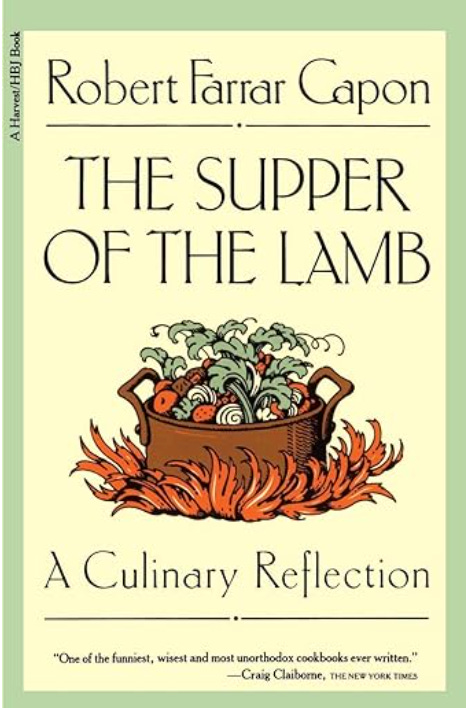
“Why do we marry, why take friends and lovers? Why give ourselves to music, painting, chemistry or cooking? Out of simple delight in the resident goodness of creation, of course; but out of more than that, too. Half earth’s gorgeousness lies hidden in the glimpsed city it longs to become.”
― Robert Farrar Capon, The Supper of the Lamb: A Culinary Reflection
It presents itself as a cookbook, but in actuality, it is 1/3rd cookbook, 1/3rd Theology of Food and 1/3rd humorous pontification of how and how not to cook and what tools to use.
It’s a primer of the goodness of creation and an anti-gnostic treatise. I’ve struggled to not just keep reading sections of it aloud! Capon manages to write a discourse on delight in the common graces of God’s good creation. Don’t come expecting theology or recipes (at least not in their usual form), but come ready to delight and be delighted.
Jesus changes everything: a new world made possible by Stanley Hauerwas
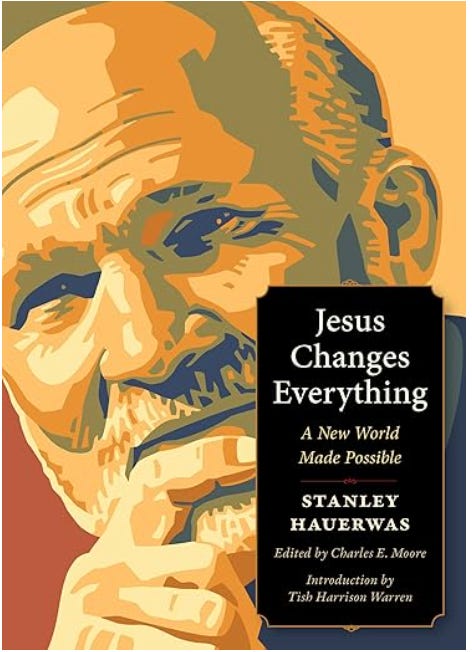
Stanley Hauerwas has been formative for a whole generation of theological thinkers and was once named by Time Magazine as “America’s Best Theologian”, to which he replied in a chracteristically plain spoken and caustic manner “Best is not a theological category”.
Stanley Hauerwas is known for being bombastic but always remains so likeable. What makes this selection of his writing so accessible is that they are focussed on what he understands discipleship to entail. Put in something close to his own language; How do we live in such a way that if Jesus isn’t who he said he is, our lives would make no sense. That at its heart is Hauerwas’ concern, that the Church would so distinctively be the Church in order that the World would know itself to be the world.
No middle ground, no grey, a clear battle for a world claimed by Jesus or otherwise certain to be damned. In the world he grew up in (Texas Methodism), cultural nominal Christian was the ‘done thing’ and yet his life long grapple has been with the radical implications of Jesus as King. The book opens with this quote;
“The theologian’s task is to make it difficult to be a Christian. It is also to make it equally difficult to be a non-Christian, that is, to present an account of Christianity that shows the difference that being a Christian makes and how that difference may intrigue and challenge those who are not Christian.”
—Stanley Hauerwas
Confessions by Saint Augustine (trans. Sarah Ruden)
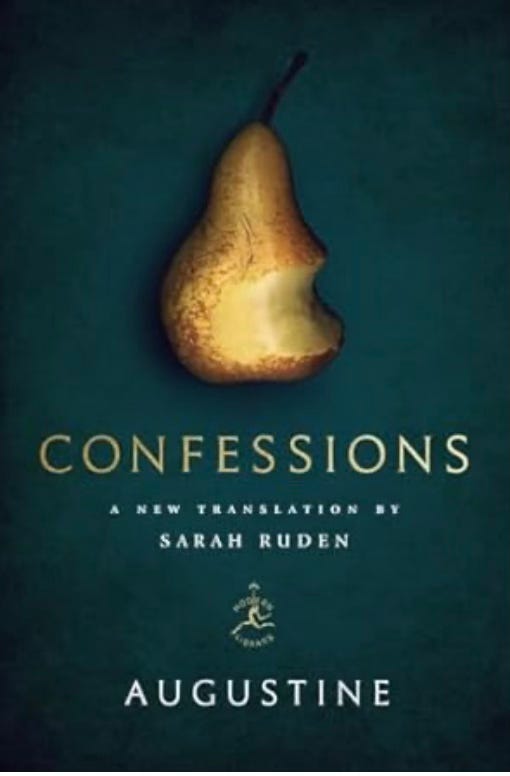
This year, I was accepted into a Catherine Project reading group that met on Wednesday afternoons via Zoom to discuss Augustine’s Confessions chapter by chapter (though to the modern mind-confusingly, Augustine organises the book by “books” rather than chapters).
While my appreciation of the text itself deepened through the process, what struck me most was the value of discussion. This may seem obvious to anyone familiar with educational theory, but even in a group composed as it was, not of experts but of fellow interested lay readers, the act of talking through the text—debating, clarifying, and sometimes disagreeing—significantly enhanced my understanding.
In some cases, I found that my appreciation and understanding of a chapter I had read multiple times alone was often transformed and clarified through the group conversation. The experience convinced me that reading groups offer exponential returns on comprehension and critical reflection, especially for works like the Confessions.
So, what can be said about Augustine’s Confessions that hasn’t already been said (by scholars far more qualified than me!) ? The book is a classic of Western literature and, in many ways, invented the genre of psychological autobiography, a genre that is now so common that we take it for granted.
Augustine combines philosophical depth with poetic sensibility, all while recounting his life with a remarkable openess. He spares little effort to reveal his inner struggles, his ambitions, and his failures, guiding the reader through his journey toward the moment he commits fully to following Jesus. At the time, biographies existed to aggrandise their subjects, and by the time Confessions was read, Augustine was a highly esteemed bishop. The same temptation must have been present, and yet Augustine offers what, at the time, must have constituted quite a ‘tell all’ account of his moral foibles and temptations.
Even read simply as a work of religious devotion, the Confessions is engaging. Yet what makes it truly remarkable lies beneath the surface: it is a profound meditation on the transformation of self-understanding and identity formation that runs from an almost modern sense of being “self-made” to claiming an utter dependence on God for a sense of self.
Although the circumstances of Augustine’s life, as a North African in the fourth-century Roman Empire, may feel distant; his impulses, desires, inner conflicts, and relationships have continued to resonate with readers throughout the centuries that followed.
A recurring tension throughout the Confessions is Augustine’s struggle to know himself apart from God’s knowledge of him. As he recounts his development, he often lingers obsessively on small details while spanning vast periods of time in a single paragraph, leaving the reader eager for clarification or a follow-up. What grounds his movement is a personal devotional transformation but also an adaption of his philosophical framing of the world from abstraction to personalism.
Towards the end of the book, Augustine engages with profound reflections on the nature of time, which became foundational for later theological thought. Yet even in the midst of these intellectual focuses, what remains timeless is Augustine’s story and it’s telling: his honesty, his restless searching, and the transformation of his character.
If one were to imagine a modern retelling, a fitting title might be From Hustle to Humility, capturing the arc of a restless, searching soul learning to move beyond self-preoccupation toward being grounded in the grace/gift of existing and existing before the face of God.
A Theology in Outline: Can These Bones Live? by Robert Jenson

A few months ago, I delivered a series of lectures to some young Christians titled “The Nature and Character of God.” Throughout Christian history, there have been extended philosophical and abstract reflections on a series of attributes considered important for defining God (the “omnis,” and so on). Yet this is not how God has chosen to reveal himself in Scripture or in the person of Jesus.
So I designed the talks to survey the biblical story in such a way that God’s character is revealed within the context of a narrative—one that repeatedly challenges many of our assumptions about what is true and, in turn, claims our very lives as the place where these truths are worked out.
As I was reflecting on this approach with a friend over WhatsApp, he said, “That sounds very much like what Jenson was doing in his book “Can These Bones Live?”
I had heard of Jenson and knew he was influenced by Karl Barth, but I hadn’t read anything further. He passed away in 2008, and this book was published a couple of years before that. It is a lightly edited transcription of an undergraduate introductory course in theology given at Princeton Theological Seminary, and I devoured half of it in one sitting. It is extremely readable, and you really get a sense that he is playfully engaging in summarising vast amounts of learning in an accessible way. Indeed, in the introduction, the teaching assistant who compiled the lectures remarks that Jenson worked from minimal notes and spoke largely extemporaneously.
The essential motif, taken from the title of the course, is the question spoken to the prophet Ezekiel: “Son of man, can these bones live?” Jenson uses this question to frame a journey through the classic themes of Christian theology, centring on what it means to live, and what it means to be a people liberated from death through the—unique among religions—centrepiece of Christian conviction: the resurrection. This question of whether God’s life can inhabit and resurrect human life runs throughout Israel’s story and into our contemporary context, shaping both the life of the church and the task of Christian theology.
Face to Face Volume 1: Missing Love by Marty Folsom

Marty Folsom is a Theologian and Scholar who has produced work related to Karl Barth and is involved in the TF Torrance Fellowship. In addition he is also a therapist. If you know anything about Torrance or Barth, you’ll know their systems of theology are intricate and philosophical, but what Folsom embodies is a person who has seen the beating heart of personalism embedded in both of their theological approaches. In Face to Face, he attempts a layman’s introduction to a relational theology. This would be a great series to develop a catechesis (discipleship) course around. It’s a theological education that engages personal life, brokenness and wholeness.
Alienation and Acceleration: Towards a Critical Theory of Late-Modern Temporality by Hartmut Rosa

Hartmut Rosa is a critical theorist influenced by the Frankfurt School. Some conservatives pejoratively label thinkers like him “Cultural Marxists.” While critical theory often gets a bad reputation, I see it as a secular way of naming what Christians call “the world.”
In Christian thought, sin, the world, and the devil are forces opposed to God’s kingdom. While we often focus on individual sin, the Bible also describes systemic forces — structures that dehumanise people and prevent them from living fully as God’s image-bearers.
Critical theorists, in my view, provide a lens for understanding these systemic realities. They rarely offer a “Christian cure,” yet in this book, Rosa comes surprisingly close to what might be considered a transcendent solution, at least from a secular perspective.
Rosa is a phenomenologist, meaning he studies lived experience, and in this book, he seeks to describe what it feels like to live in an age of “social acceleration.” S
ocial acceleration is not just the feeling that time moves faster; it is the sense that the demands on our time are ever increasing.
“Modern life is speeding up incessantly, and while new technologies theoretically save time, we nevertheless feel as if we are running out of time — not to get somewhere, but simply to stay where we are.”
Consider communication: letters once took days to arrive, but email is instantaneous, creating a constant demand for immediate response. Technology has become more efficient while simultaneously overburdening those who use it. This relentless pace produces what Rosa calls alienation.
“Modern acceleration is driven by the cultural promise that a richer, fuller life comes from ever-greater experiences — yet this acceleration ultimately traps us in a cycle where our hunger for life is continually frustrated.”
Rosa’s diagnosis mirrors the Christian understanding of sin as disconnection. The modern world’s pace undermines our ability to form meaningful relationships. As a Marxist, Rosa might identify market forces that profit from this alienation, selling countless commodities that promise connection but deliver little.
The remedy, Rosa argues, is what he calls resonance. Resonance is not simply appreciating a beautiful sunset or forcing oneself to slow down. It is relational: a two-way engagement in which both parties are affected, transformed, and experienced as a gift. Andrew Root, in The Congregation and the Secular Age, illustrates this with a child at play who looks up and exclaims, “That was great.” The joy is mutual and unmanufactured, a true encounter of gift and presence.
As Christians we often have an account of disconnection, but our descriptions of how that disconnection weighs on us can tend to be simplified in a way that doesn’t map onto the complexities of the systems and rhythms that make our world. Rosa paints an important picture to name some of the forces that dehumanise in our world and how they' have inhabited the very way we name, experience and inhabit time. This is cultural critique worth reflecting on.
Easter: The Season of the Resurrection of Jesus
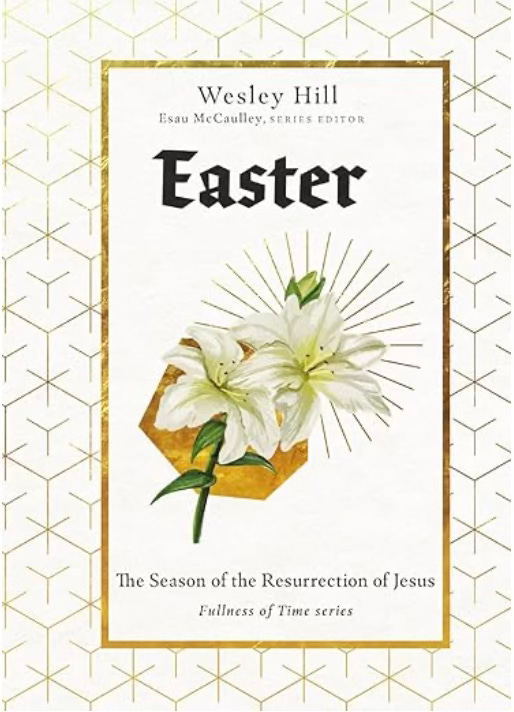
Wesley Hill is a New Testament Scholar who has written one of the latest installments in the “Fullness of Time” series which is overseen by Wheaton Professor Esau MacCaulley.
The intention of the series is to re-introduce the Christian calendar to those who may have grown up in low church traditions. The other lesser known festivals and fasts (such as Epiphany or Pentecost) have enjoyed a more historical-liturgical focus, but given that all stripes of Christian pay attention to Easter gave Hill a different opportunity; to present the Gospel story once more.
Hill unpacks the story once again, the significance of resurrection, importance of ascension and the richness of an Easter liturgical service he attends bringing to life the Story in a high church worship setting. It was an enjoyable short book that brought focus to this season for me this year.
The Church: A Guide to the People of God by Brad East
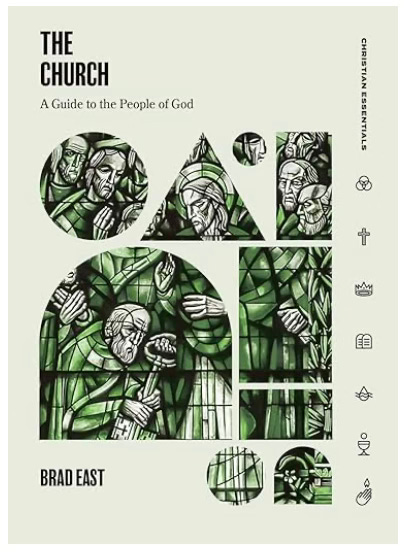
Brad East’s other work has clearly influenced his writing of this one, as he mentions in the opening that there are not many of the classic ecclesiology subtitles included here. Instead, East’s main burden in the book is to write in such a way that God’s love for His people shines through.
At the beginning of the book, he reflects on Mary (which has become more common in protestant circles in the last decade) as a carrier of the gospel and its mission. Rather than beginning in Acts, where a great deal of reflection on the Church tends to begin, he moves through the story of Abraham and the people of Israel for at least half of the book. In this way, he gets to the birth of the Church in such a way that, in a compelling way, shows how the church, although grafted in as Gentiles, are also the promise and fulfilment of God’s call to Abraham and later Israel.
The last chapter, “Entrusted”, changes format and turns to a series of numbered points. They are clear and compelling, but I wondered if the change of format was due to reaching a word limit for these small books, or just a way to summarise his final thoughts. The numbered points were a useful way of considering the nature of the Church, and I’ve considered summarising and reflecting on them in future lectio issues. Brad East’s other works have drawn on Robert Jenson, Karl Barth and John Webster, and one of his previous books included a foreword by Katherine Sonderegger. All of these are ‘heavy hitter’ systematic theologians, and his work and voice are clearly influenced by the (post-liberal reformed) traditions these theologians represent. This book is well worth engaging in and is beautifully written with enough food for thought for even the most well-read on this area.
Letters to a future Saint: foundations of faith for the spiritually hungry by Brad East
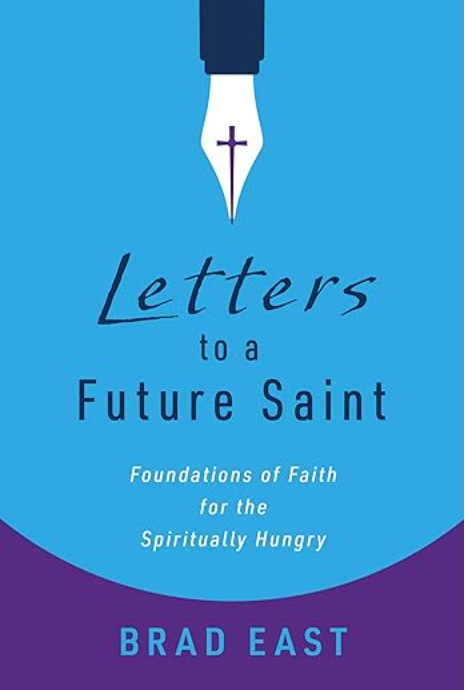
Another book from Brad East, who as you may have surmised from his multiple inclusions here in the reading list, I think is one of the best and most readable young theologians working today. In this book, He published a series of letters which began as letters to his young relatives as they prepared to be baptised.
These have been developed into short-form catechesis. Catechesis is still practised in some traditions but historically it is the teaching period that runs up to baptism and helps the person who is about to be baptised take in the whole story of God and come to an understanding of what it is they are doing when they put off their old life and put on the new.
Brad East does this in an easy to understand way and would deepen mature and early Christians to the nature of our faith and the life that flows from it.
Biblical Critical Theory: How the Bible’s unfolding story makes sense of modern life and culture by Christopher Watkins

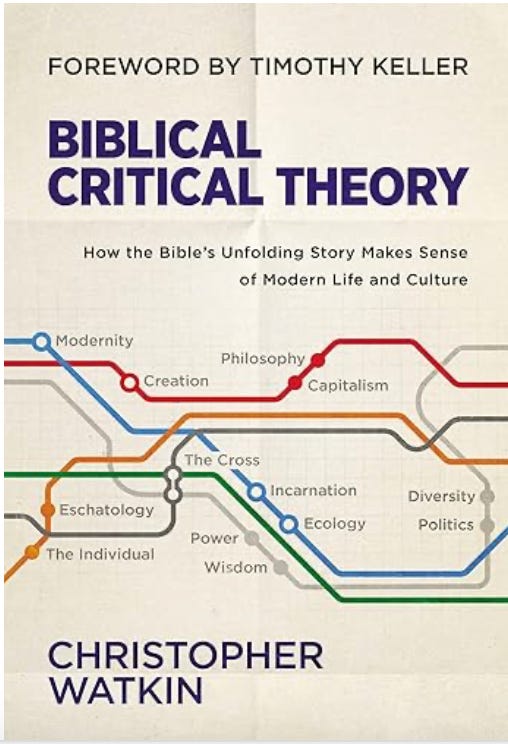
Christopher Watkin has attempted something that can only be described as magisterial in scope: an evangelical account of worldview for a postmodern age. Although Watkin is a committed Christian, he is also a serious scholar of French and German postmodern philosophy, and this dual identity shapes the distinctive approach of the book.
Rather than dismissing critical theory as merely ideological or politically captured, Watkin seeks to reclaim and redeem it. At its heart, critical theory is an attempt to view the world through a lens that names what is wrong and gestures toward how it might be made right. At this most basic level, Watkin argues that the biblical story is itself the ultimate form of critical theory. It offers not only diagnosis but also a coherent vision of redemption.
Watkin explicitly grounds his method in Augustine’s *City of God*. Like Augustine, he does not seek to defeat the dominant culture by arguing on its own terms, which today might look like adopting a purely scientific or secular framework for apologetics. Instead, he aims to describe the world using the categories and story of Scripture, allowing the Bible to set the terms of the conversation rather than merely reacting to those set by modern culture.
There is much in this book that is praiseworthy. Above all, it is written in a gracious and winsome tone that resists the rigid either-or thinking so common in Christian cultural commentary. Instead, Watkin argues that many of the perspectives offered by the Bible are what he calls “diagonalisations”, connections between things that secular thinking tends to force apart. A clear example is the false opposition between justice and love, which Scripture holds together rather than choosing between.
What is particularly refreshing is that Watkin does not reject non-Christian critiques of the world out of hand. Instead, he seeks to gather what is true and perceptive in them and then filter them through a biblical framework. Throughout the book, he models a way of thinking that takes opposing viewpoints seriously, recognising that a coherent Christian position often emerges through careful engagement with real and powerful counterarguments.
The sheer length and ambition of the book mean that some of the more complex or controversial issues are necessarily treated quickly. Even so, it provides a valuable reorientation of the idea of “worldview,” an idea that has become increasingly politicised and tribalised. One of the book’s great strengths is its ability to introduce readers to areas of philosophy and theology they might otherwise never encounter. In this sense, Watkin proves himself to be not only a thoughtful guide but also a trustworthy and illuminating one.
Paul; a biography by Tom Wright
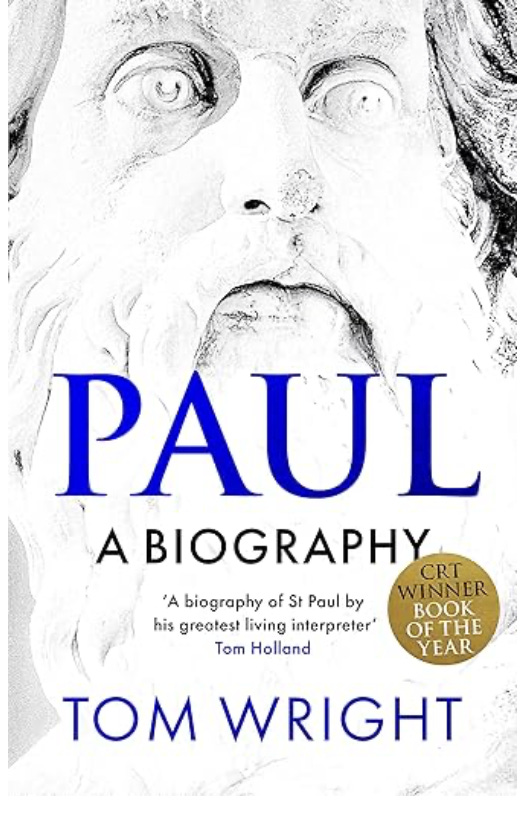
The enjoyment of reading books was only multiplied by reading along with others. This book formed the basis of our conversations in the Life of Paul seminar and it is excellent.
Tom Wright is a world renowned pauline scholar and in this book he unpacks a biography of Paul using the biblically available details and then, from his incomparable career in the study of Paul, offers some possibilities for the gaps which scripture doesn’t speak to.
A few things that came alive to me through this book and the conversations we had in the class in Lausanne;
We only ever hear of evidence of Paul’s sister (in Acts 23:16), but after the Damascus road experience he returns to Tarsus, where he grew up, for around 10 years before Barnabus goes to find him in Acts 11. As we know Paul’s family is jewish, affords him an excellent jewish education in the tradition of the pharisees, his father was a pharisee and has a business in tent making. But we don’t hear any evidence that his family (apart from his nephew, and presumably his sister) become Jesus followers. This is interesting to consider when we put it alongside the family metaphors that Paul then employs extensively in his explanation of what the Church should be. We often think of Paul as a stand-alone super hero, but his possible estrangement from his family, his conflicts with barnabus and the tension with the Jerusalem church created a deep need in him, which he refers to consistently through his letters to various churches, for a familial sense of connection.
After being encountered by Jesus on the Damascus road Paul ‘withdraws to Arabia’. Some traditions theorise that he went to the location of Mount Sinai where YHWH established his covenant with the people of Israel as the beginning of a wholesale recalibration of the jewish story for him as he considered God’s salvation purposes now made known in the person of Jesus.
Those who are aware of some of the contentious discussions within the interpretation of Paul should be prepared that this is of course a Wright-ian view (with his particular NPP approach). What is so often the case with Tom Wright books is that they are just technical enough to intimidate the lay reader and yet when read carefully among others can initiate entirely fresh perspectives on people and stories in the Scriptures that have become too familiar.
The book sings when Wright allows himself to imagine the emotional and biographical realities that sit behind Paul's letters as someone who has spent his entire life reading and researching them. His reflections on the Damascus road encounter and a potential breakdown following imprisonment are worth the price of the book itself. These humanising moments allow the Paul behind theology and biblical interpretation to become a real person who gave everything in his life, re-thought everything as a ‘jew of jews’ as a response to an encounter with Jesus of Nazareth.
I, Julian by Claire Gilbert
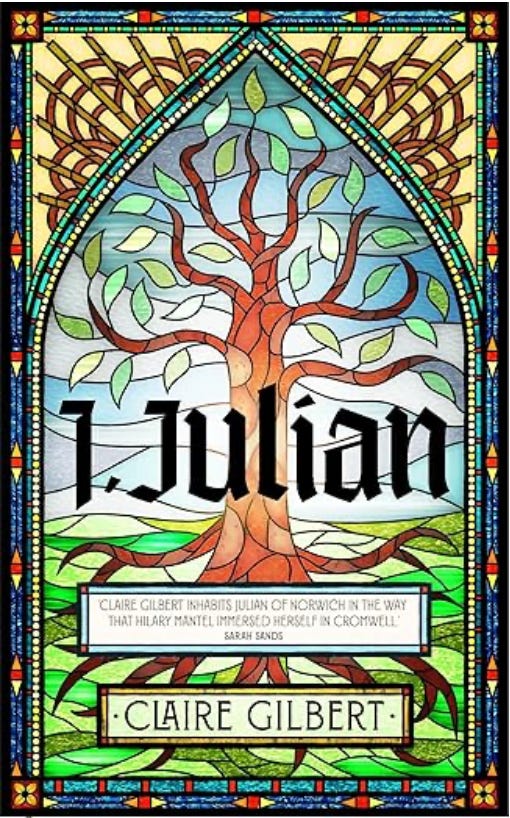
Claire Gilbert has crafted a fascinating fictional autobiography of Julian of Norwich, the famous catholic mystic and anchoress, famous for her work “revelations of divine love”.
The book weaves together a fictionalised but humanising troubled life before becoming a hermit and includes accurate historical details of medieval england in that period that I was unaware of.
What made the book particularly luminous though was the reflections on the experience of solitude, contemplative prayer and spiritual direction which evidence Gilbert’s own awareness and sensitivity to the often-times inarticulable character of those experiences.
The Life You Save May Be Your Own, The: An American Pilgrimage by Paul Elie
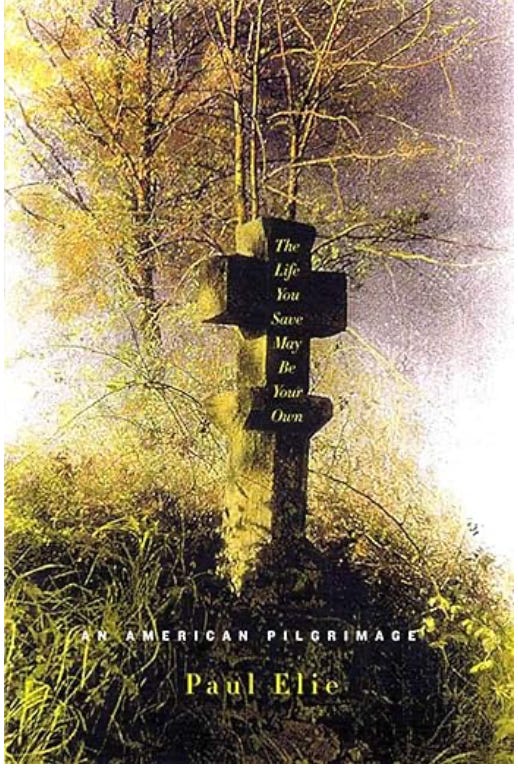
I finally finished Paul Elie’s biography of the catholic authors, Thomas Merton, Flannery O Connor, Dorothy Day and Walker Percy. It is clearly a masterpiece of literary journalism and is extremely attentive and sympathetic to the complex nature of faith each of them had. While it is ornately written, I couldn’t help by feel by page 480 that it could have achieved its feat with more concision
The New Yorker published this short review in 2003;
This long, unusual book consists of interleaved biographies of four mid-century American writers—Dorothy Day, Thomas Merton, Walker Percy, and Flannery O’Connor—who, though they rarely, if ever, met, are connected by the fact that they were all serious Roman Catholics and therefore alone: isolated both from literary circles (anti-religious) and from the Church (anti-literary). Except for O’Connor, they were converts; they “read their way” to religious experience, and then became writers, so that others could pick up the trail. They were very different—Day was devoted to social service, Percy to philosophy, O’Connor to literature, Merton to the inner journey—and Elie doesn’t love them all equally. O’Connor is his favorite. Merton is the one he struggles with, but, by virtue of his warm, clear writing (better than Merton’s), he makes us care about the self-involved friar, too.
The review was interesting to me because, unsurprisingly, I was drawn to the interlaced sections in my own order of interest, awareness and sympathy; Merton, then Day, Then O’Connor and finally Walker Percy who I knew almost nothing of.
The Shape of Joy: The Transformative Power of Moving Beyond Yourself
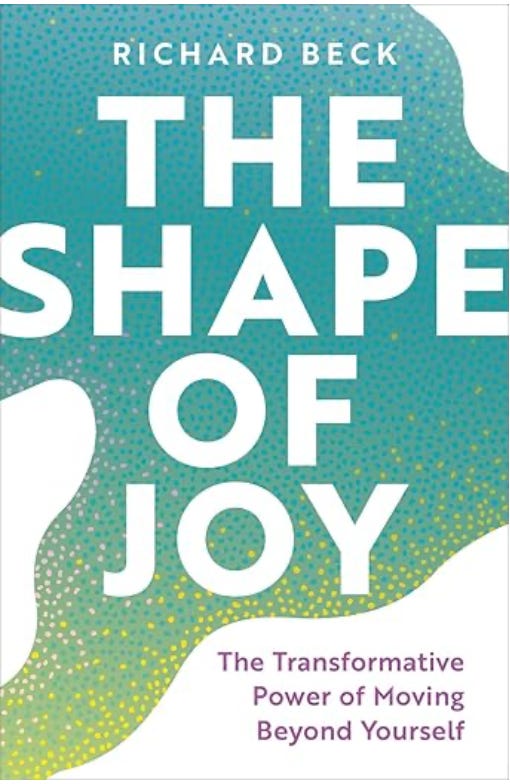
In a world increasingly exhausted by the demand to “be yourself” (as I note in my review of Rosa’s Acceleration and Alienation), Richard Beck offers a welcome alternative by weaving together a Christian theory of transformation with a critique of the Freudian impulse to turn inward.
Beck’s central claim is simple: joy becomes available only when we open ourselves to the world and to others beyond ourselves. Rather than treating joy as something we can locate through introspection or emotional self-management, psychology now increasingly supports what Christianity has long taught—that love, self-forgetfulness, and outward-directed attention are the true pathways to a joyful life.
Like happiness, joy is a secondary phenomenon. You cannot grasp it by aiming straight at it. It emerges instead as a byproduct of self-giving, meaningful engagement, and sacrificial love. Readers familiar with thinkers like Hartmut Rosa, James K. A. Smith, or Martin Buber will recognize this pattern: resonance, desire, and meaning arise not from inward obsession but from relational openness.
What sets Beck apart, however, is not just the ideas themselves but how he communicates them. His enduring readership exists for good reason; he has a rare gift for integrating psychological research with a Christian vision of change in a way that is clear, likeable and deeply accessible.
The Next Evangelicalism: Freeing the Church from Western Cultural Captivity by Soong Chan Rah
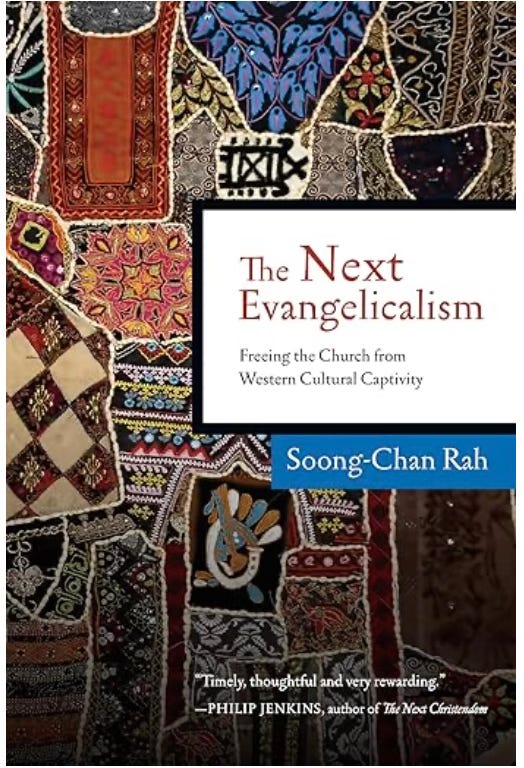
Soong Chan Rah is a Korean-American theologian and in the introduction to this book he unpacks his indebtedness to what he describes as, US white evangelicalism. But in this book he quickly moves on to critique the individualism and materialism that has infected evangelicalism and leaves us culturally bound.
His critique unpacks why mega church and the now defunct “emergent” church is simply a continuation of this pragmatic indiviudualism inherent in the cultural forms of evangelicals. He goes on to present, what he sees as a salve in the form of learning from non-western immigrant churches in humility for what evangelicals have lost.
I am sympathetic to this suggestion and have argued myself for a greater cultural humility in mission as a two way street of formation.
Essentially what Rah offers is a kind of cultural version of Richard Foster’s Stream of living water, where disparate fragmented aspects of the Jesus way need to be reunited.
The critique alone would serve most leaders who struggled to diagnose their consistently mono-cultural church environments but as I read, I was less assured that the salve will heal us fully.
I am concerned that since the writing of the book (2013, I think), there is increased cross-cultural hostility and distrust especially in the US as simple requests for humble learning from other perspective gets crushed as ‘woke’ but I am also less naive that ‘exposure and humility’ will reunite an increasingly polarised church.
Finally, Rah’s North American context inevitably overwhelms the books references and part of what the church will wrestle with (as you can see in the recent GAFCON split) is the global church, not just the church in North America. We are increasingly unintelligible to one another and bridge building will be the work of serious spiritual warfare.
Liturgical Mission – The Work of the People for the Life of the World by Winfield Bevins
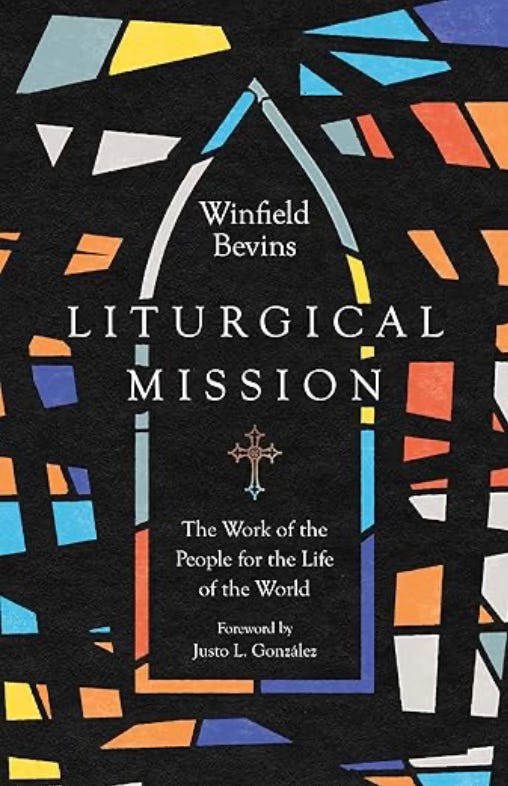
I need to begin this review with something of a confession; I was very excited at the possibility of this book. The endorsements, the chapter structure, and the book being dedicated to Robert Weber and Thomas Oden gave me extremely high expectations.
Therefore, it was potentially inevitable that I was going to be disappointed by this book. Having read reasonably extensively in the areas that Bevin’s touches on in this book I was hoping for something of a "one ring to rule them all" book for the types of courses we help run. The promise of this book was to draw together the nature of liturgy, connected to the significance of God’s Trinitarian nature and mission in the world.
For me, it didn’t quite fulfil that due to a lack of coherence. It is not that the book doesn’t make sense strictly speaking, but I imagine it was written for a lay/undergraduate audience and so many of the connections which I excitedly anticipated never appeared. If you are looking for an updated introduction to the development of themes made popular through Robert Weber's work and the connection to Church planting then it is worth your time.
How to walk into a Room: The Art of Knowing when to stay and when to walk away by Emily P Freeman
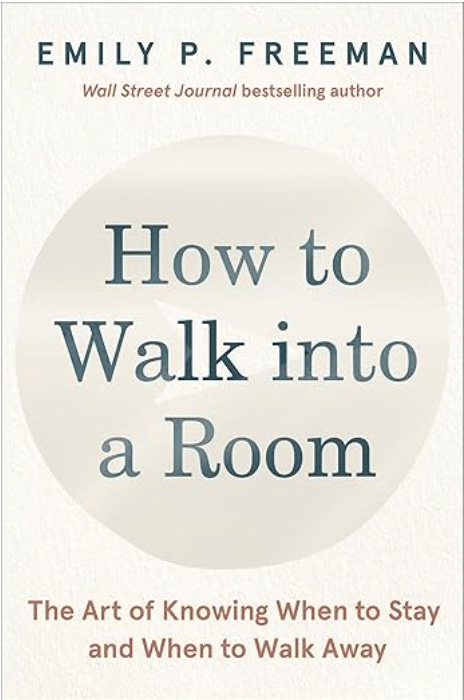
This book was popular, and it’s easy to see why. Freeman writes thoughtfully and empathetically about one of the most difficult situations people, and especially Christians, face: discerning when and how to leave communities, roles, and relationships that once gave deep meaning but no longer feel like home. What could have been a bitter, self-referential guide to church-leaving becomes something far more nuanced.
That said, I’ve struggled to recommend it. The main reason is the personal narrative that frames the book. Freeman centres her story on a church she attended for years, where she raised her children and invested deeply. After she invites a same-sex couple, they experience exclusion, and her discernment leads her to conclude the church is no longer her home. Given how divisive this issue remains, this storyline can distract and alienate some readers, despite her generally gentle tone.
Second, although the book aims to cultivate self-awareness for authentic discernment, it sometimes feels overly inward-focused. Much of its wisdom draws from Ignatian spirituality, yet the book seems edited to appeal to a broader, non-Christian audience.
While Freeman does not hide her Christian commitments, the voice of the book often feels positioned in a way meant to work either way, which can make its spiritual grounding feel muted.
I Cheerfully Refuse by Leif Enger

I started last year delving into Leif Enger’s bleakly beautiful novel “I Cheerfully Refuse”. It’s a lightly dystopian novel set in the not too distant future. Illiteracy is championed, Despair is in the drinking water and the wealth gap has widened leaving the majority in poverty. Rainy, Enger’s protagonist loses his partner in a senseless act of cruelty by a billionaires thug and goes on a somber escape journey that unfolds into acts of beligerant hope. The Washington Post comparison of McCarthy’s “The Road” meets Huckleberry Finn is on point.
There are Rivers in the Sky by Elif Shafak
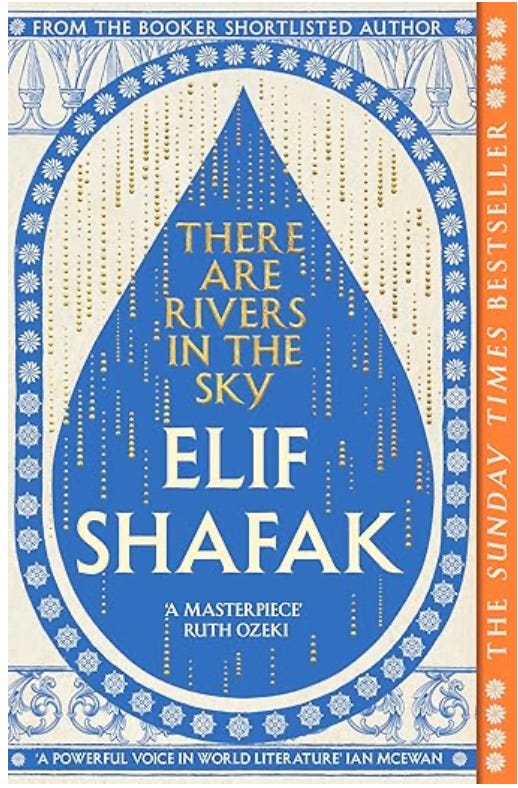
I just finished my second novel by Turkish-British author Elif Shafak, There Are Rivers in the Sky. Shafak is an excellent writer, and this novel shifts between three characters in three different time periods whose lives ultimately connect. Two of the characters are in London—one in the Victorian era, the other in 2018—and the third is a Yazidi girl in Turkey who travels to Iraq in 2018.
“Remember, my heart. Story-time is different from clock-time.’ Clock-time, however punctual it may purport to be, is distorted and deceptive. It runs under the illusion that everything is moving steadily forward, and the future, therefore, will always be better than the past. Story-time understands the fragility of peace, the fickleness of circumstances, the dangers lurking in the night but also appreciates small acts of kindness. That is why minorities do not live in clock-time. They live in story-time.”
― Elif Shafak, There Are Rivers in the Sky
This work, along with another novel, The Island of Missing Trees, about the conflict in Cyprus, weaves a fascinating focus on the natural world as a character in the stories.
If you’ve made it this far, then Well done!
As I said when I began the first 10 people who sign up with the button below with 50% for the whole year.
Becoming a member supports the work we do, and in return, you get two(ish) articles a month, alongside book, movie, music and recipe recommendations and access to all 100 of the previous issues.
The next Lectio will be out in a couple of weeks, full of music, food, reading and link suggestions along with an article from me, and should be slightly shorter than this one..
Grace and Peace,
That’s all for now,

Very impressive Liam, I love reviewing my year in reading too, but this is next level and inspiring stuff, thanks for sharing!