“We do not build the kingdom of God on earth by our own efforts (however assisted by grace); the most we can do through genuine prayer, is to make as much room as possible, in ourselves and in the world, for the kingdom of God, so that its energies can go to work. All that we can show our contemporaries of the reality of God springs from contemplation: Jesus Christ, the Church, our own selves.”
— Hans Urs von Balthasar, Prayer

Dear Lectio Letter Readers,
Thanks for opening this again, there’s a whole 105 other issues you can explore here! And I’d be over the moon if you’d consider supporting our work in deepening discipleship for those engaged in cross cultural ministry.
This time there is no main article, but a bumper list of updates, recommendations and some links to interesting things I’ve been reading both on and offline. I hope you enjoy..
You can become a paying subscriber by using the button below or read more about our work here.
Status Board
Since the children’s camp, it’s been another exciting month for us on the road.
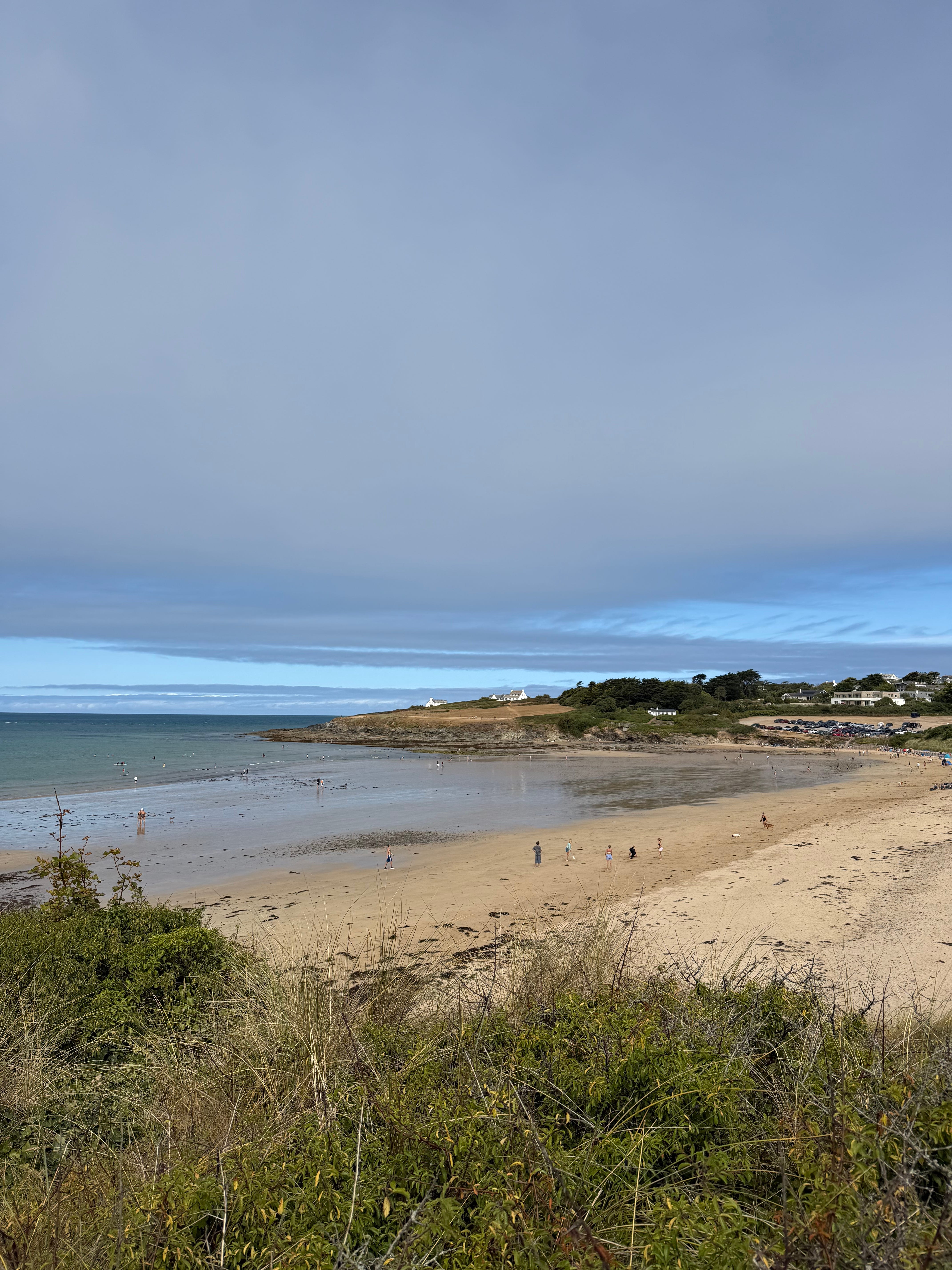
We’ve just returned home after some whistle stop movements to my family in Cornwall, England on to London for some YWAM meetings via visits to friends near Penzance and others near Exeter. The YWAM Meetings were with some Spiritual Directors who will staff our upcoming M.A. in Christian Formation. While there are many approaches to discipleship, I am particularly grateful for the ways in which Spiritual Direction (broadly Ignatian transposed into a lightly evangelical key) creates a desire to pay attention to how God might be waiting to be ‘noticed’ in the circumstances of one’s life. I’ve realised that God’s answer to theodicy is Himself, which is an opaque way of saying that, in suffering, personal presence is more significant than abstract explanations.


Finally we spent 3 grateful days (via Easyjet) gatecrashing our friend’s summer. They sublet a small flat in Naples (hence the picture in the opening of the email) before returning to South Africa.


What I’ve been reading
The Shepherds Life
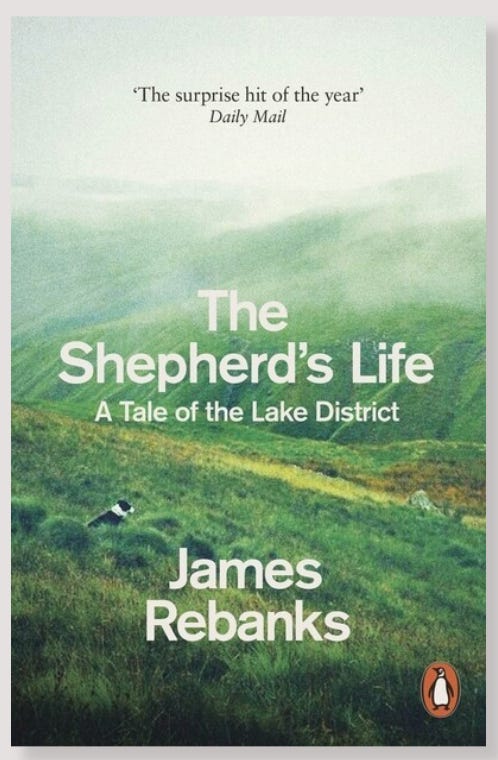
If, recently departed, Wendell Berry didn’t have faith and lived shepherding in the Lake District, this might have been the book he wrote.
A pastoral epistle talking about how setting aside the romance of poetic agrarian vision creates space to see the truer beauty of it in the warp and weft of everyday shepherding.
Some people's lives are entirely their own creations. James Rebanks' isn't. The first son of a shepherd, who was the first son of a shepherd himself, he and his family have lived and worked in and around the Lake District for generations. Their way of life is ordered by the seasons and the work they demand, and has been for hundreds of years. A Viking would understand the work they do: sending the sheep to the fells in the summer and making the hay; the autumn fairs where the flocks are replenished; the gruelling toil of winter when the sheep must be kept alive, and the light-headedness that comes with spring, as the lambs are born and the sheep get ready to return to the fells.
— LRB
Matthew: A Commentary — Stanley Hauerwas
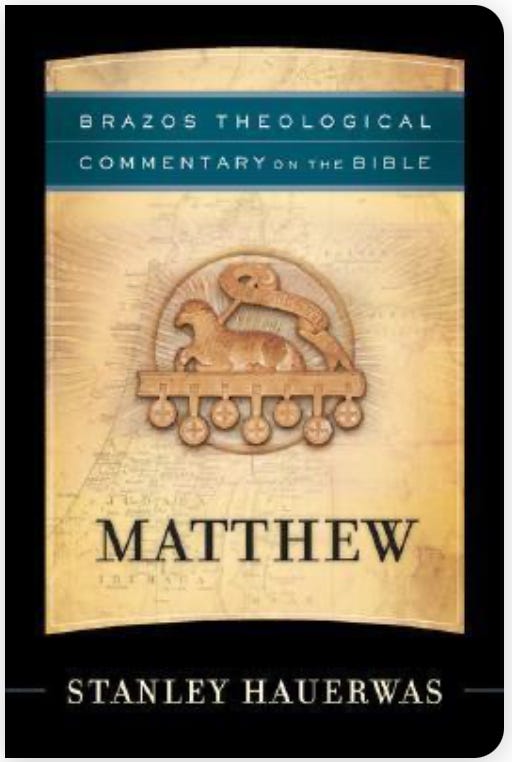
“Apocalyptic is the disruption of time by God’s time so that time might be redeemed. Apocalyptic means that there is another world, another time, than the one in which we live; but it turns out to be the same world in which we live.
As Rainer Maria Rilke puts it: “There is another world, the same as this one.” We simply must learn to see the world in which we live as the world that the Father created and redeemed through the Son.
That seeing, moreover, entails a politics that challenges our most fundamental assumptions about the way things are.
Matthew’s gospel is, therefore, an ongoing exercise to help us see the world through
—Hauerwas, Matthew: a theological commentary p.24
Hauerwas is known for being a bull in a china shop when it comes to his writing and speaking. While many disagree with his theological perspectives on both the right and the left, he nevertheless provokes his listeners to probe the practical ethical realities that flow from lives shaped by communities that claim to follow Jesus.
This commentary is not, in a classic sense, a commentary but overhearing Hauerwas think as he reads Matthew. For that reason, I enjoy reading commentaries that are written, as is customary, towards the end of august theological careers from those who haven’t been in the biblical studies realm.
Twelve Churches
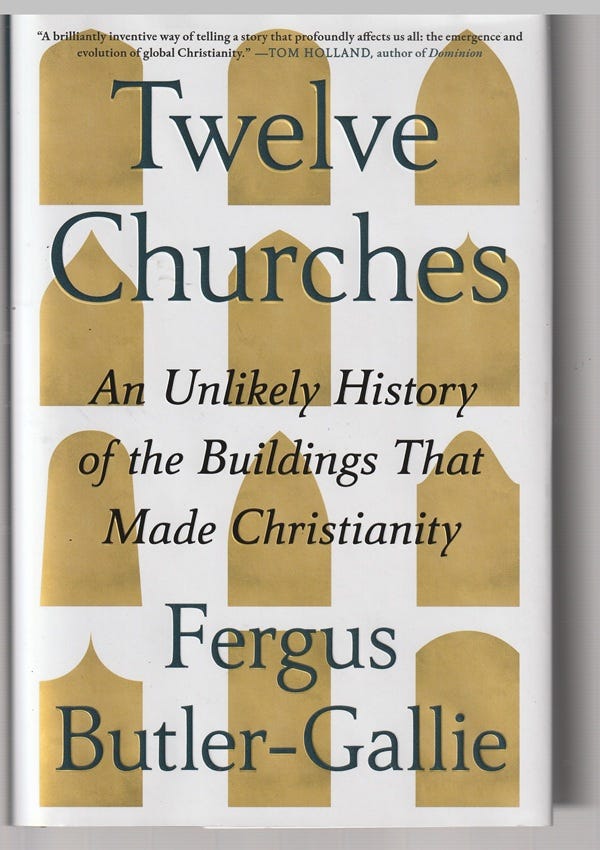
There are countless church history book, academic and popular, but here Fergus Butler-Gallie considers church history through a vignette of the places and buildings that marked it’s turning points. It’s the kind of book that creates a good pop-level introduction to some of the major transitions but it rewards the person who already has a good sense of these movements by rooting them in the story of the buildings that represent them. If you are looking for an intro to christian history I would turn more toward Justo Gonzalez or Mark Noll, but this is a good way to see the overlap of buildings that represent the church through history and geography.
Each chapter covers one location;
The Church of the Nativity, Bethlehem, West Bank of Palestine.
St. Peter’s, Rome, Italy.
Hagia Sophia, Istanbul, Turkey.
Canterbury Cathedral, England.
Mount Athos, Greece.
Bete Golgotha, Lalibela, Ethiopia.
Templo de las Americas, Dominican Republic.
Kirishitan Hokora, Kasuga, Japan.
Site of the First Meeting House, Salem, Massachusetts, United States.
Christ Church, Zanzibar, Tanzania.
16th Stret Baptist Church, Birmingham, Alabama, United States.
Canaanaland, Ota, Nigeria.
Visiting Church House BookStore
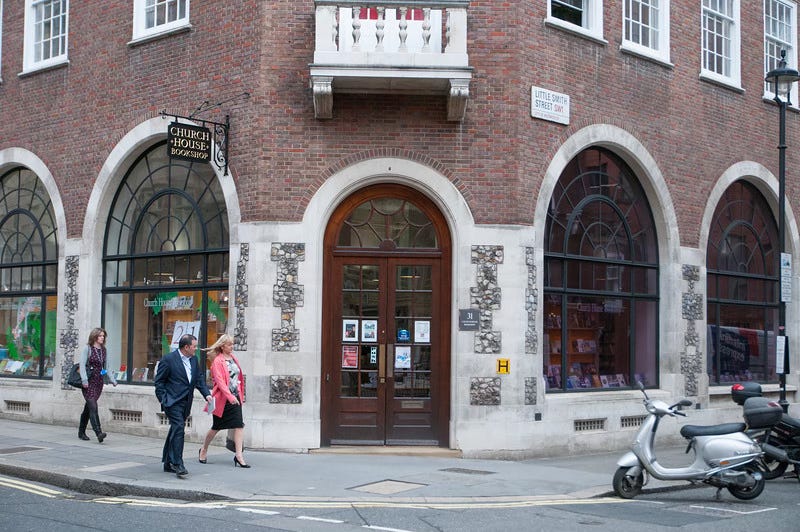
On our recent trip to London, I left Rachel enjoy the area near Covent Garden and downloaded the VOI app (due to google maps informing me they were cheaper than alternative rent-by-the-minute electric bikes) and cycled off to Church House Bookshop.
I discovered that my last visit was during a renovation and at that time half the room was discounted. Instead this time, I was greeted by a much smaller shop surrounded by a (surprisingly for the CofE) trendy cafe. It was still a minor treasure trove even if the RRP of Christian books climbs ever higher. I spent around an hour and that was enough for me to scan every shelf at a leisurely pace.
Watching
Kabul
Kabul chronicles the few days before the U.S. evacuated and different embassies were attempting to evacuate their citizens and those who had worked for them over the many decades of the western occupation. It is a haunting personal dramatisation of those unimaginable days.
Ludwig, Season 1
Despite having watched almost all of the long running UK show “Would I lie to You” on which David Mitchell is a regular, we hadn’t heard of murder-mystery “Ludwig” in which he plays the main role.
Ludwig follows a reclusive puzzle-setter who secretly takes on the identity of his missing identical twin brother to find out what happened to him. We’ve really enjoyed it.
What we’ve been Eating
Through the generosity of others and the lack of a kitchen in some of our accommodation we ended up at some seriously delicious spots to eat.
Golden Dragon Dim Sum, ChinaTown, London
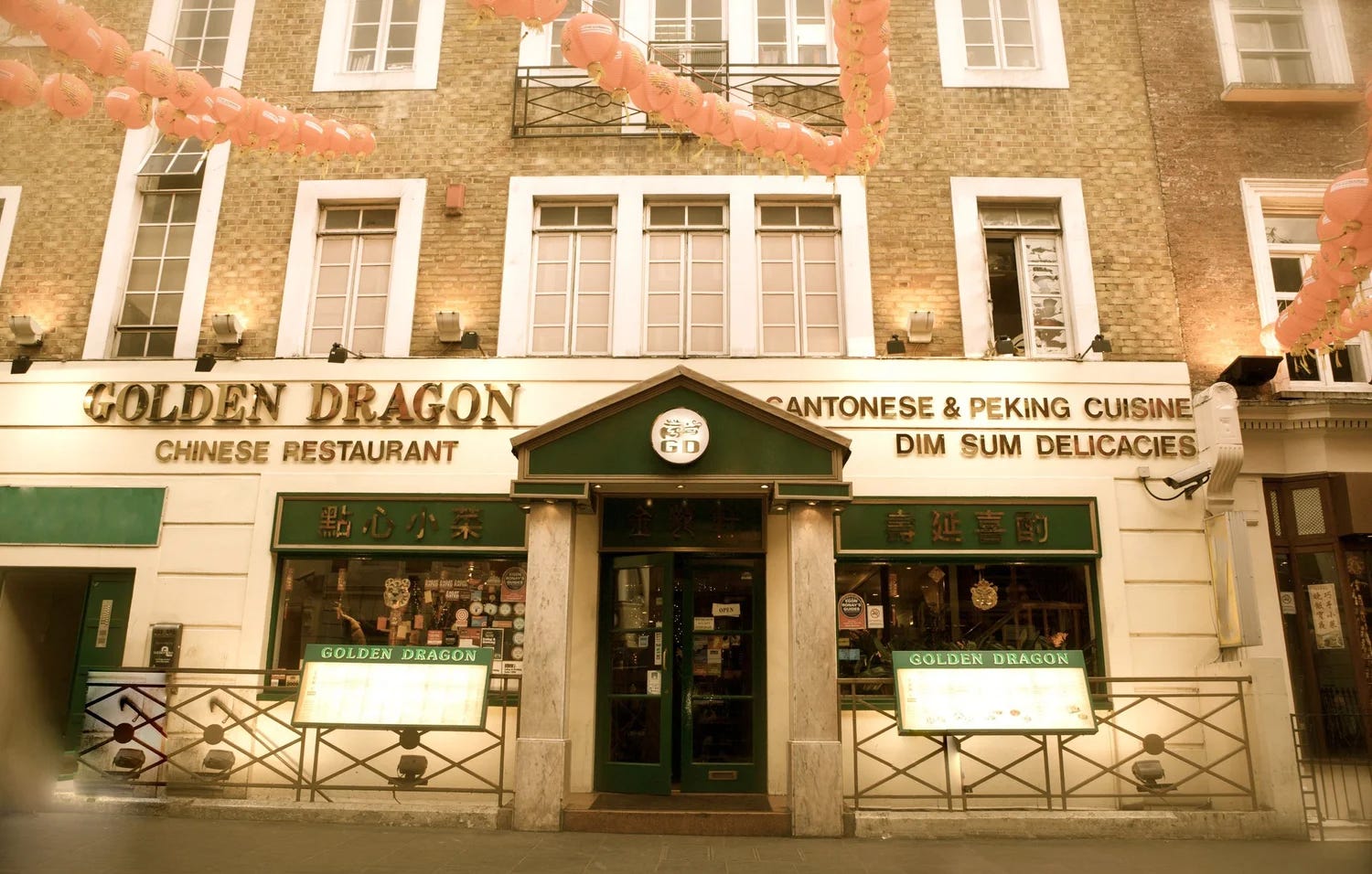
I'm sure there are more refined locations for dim sum in London, but this place has become a "shopping day" tradition for Rachel and I when in central London.
It is always busy across two floors sometimes requiring queueing. But this time we were straight in and as soon as you sit down Jasmine tea and the lunchtime dim sum menus come out and we already know our favourites.
There is nothing particularly refined about the spot, but it is the quickest and for our money, delicious place in central London for Dim Sum. We are often here as a two, but it would definitely reward a larger group allowing you to explore more widely.
Our lunchtime recommendation for "snacks" are the Char Sui Pastry buns and sesame covered prawn rolls.
Four Boys, Rock (near Padstow/Polzeath, Cornwall)
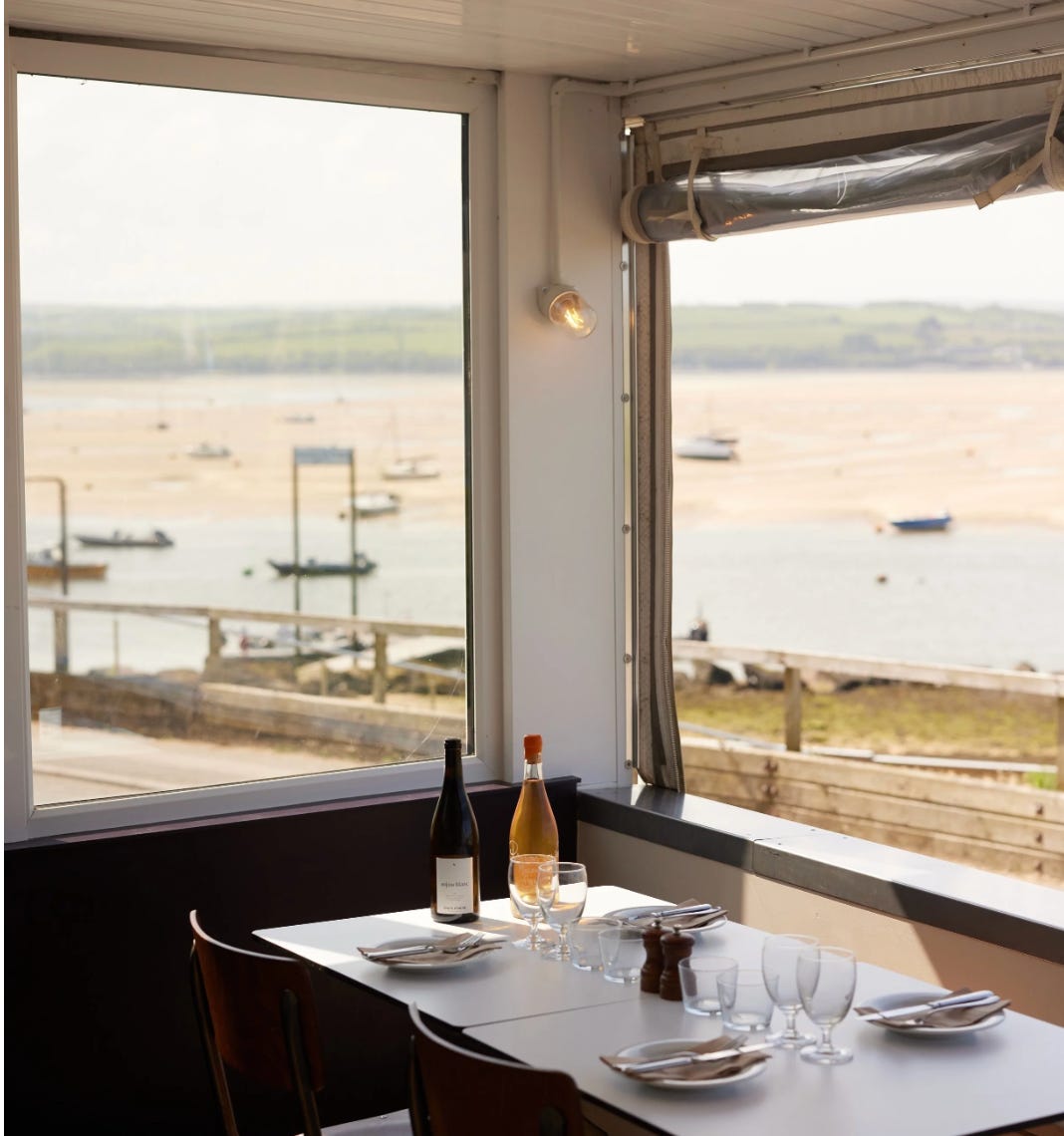
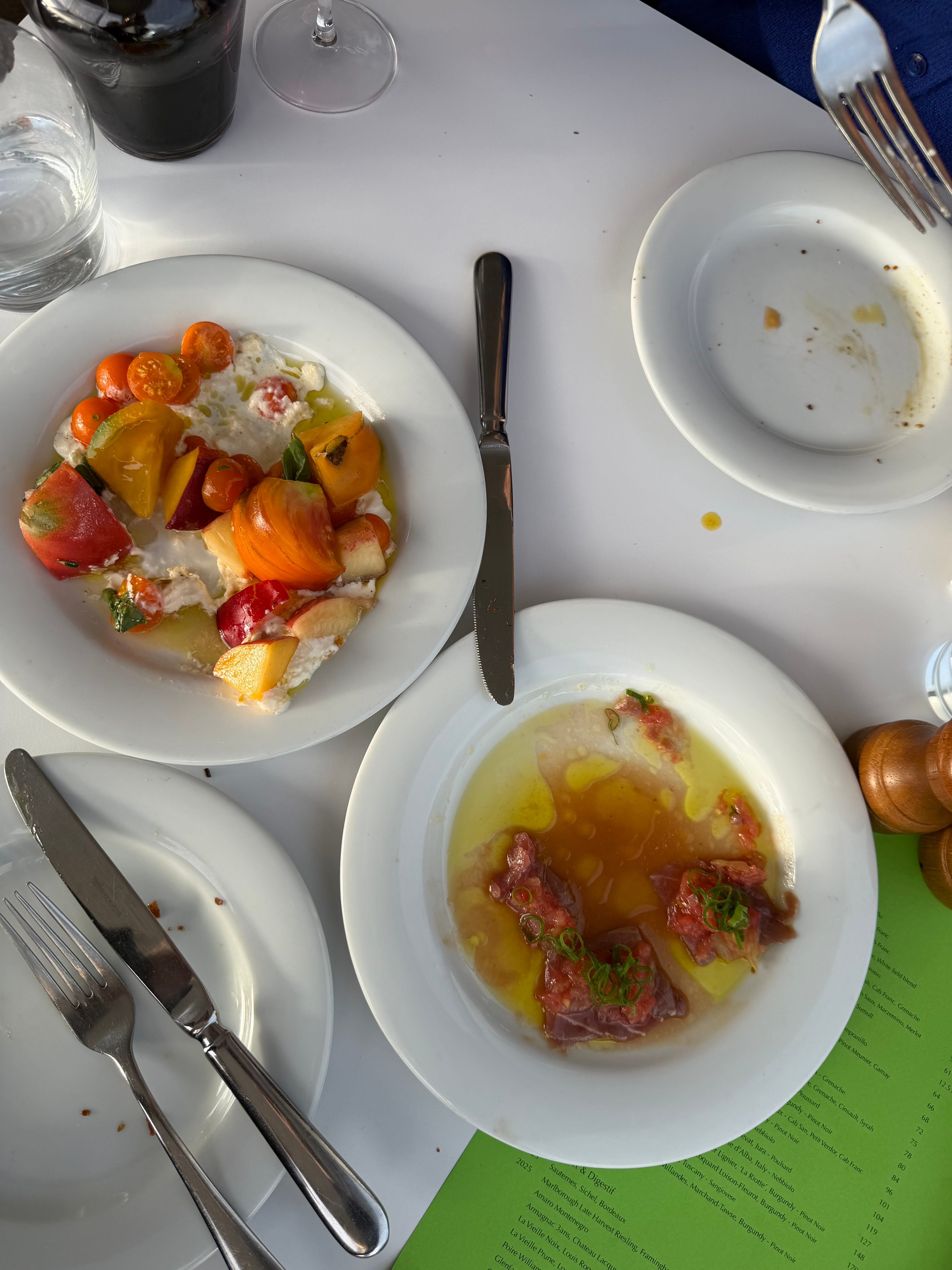
Thanks to a good recommendation we managed to get to Four Boys which did not disappoint. Looking over the Camel river towards Padstow this spot offered the most delicious few bites we may have had while Cornwall. It’s busy and we were lucky to sneak a walk in table.
The Gurnards Head


Our dear friend Mackie took us out to the famed Gurnards Head on the Lizard peninsula between St Just and Penzance. It’s a step above bistro-pub but still feels unpretentious enough to feel relaxed. We enjoyed a few delicious courses together and had a wonderful night. It’s worth the medium-splurge should you find yourself in this direction.
Gorse


On a last minute suggestion from friends who know a good bakery, we stopped off a Gorse. To our great surprise we discover Andrew Lavers fellow Subtack-er and elder at my childhood church in cornwall was the barista (and he makes great coffee)! The pastries were delicious and the place was deservedly mobbed.
DAdolpho


Based off a last minute recommendation we wandered into are serendipity in Dadalpho. After receiving the recommendation we cancelled our ferry ride trip to Capri and rented mopeds to dodge the traffic along the Amalfi coast. Arriving in Sorrento, we made it down to the harbour having failed to make contact with this famed establishment.
To our momentary despair the boat driver informed us the restaurant was fully booked. He lingered in the boat just off the harbour while our crest fallen silhouette’s haunted his sufficiently to radio home base and confirm that if we were to come and be willing to wait they might find us a table. The restaurant boasts its own private beach and in such a circumstance, waiting for a table becomes no great \suffering.
Given its location and the theatre of arrival by boat Dadolpho doesn’t need to have great food, but fortunately for us it did. We enjoyed a great selection of seafood and pasta before taking a final dip in the sea before the 4pm boat whisked us back to Sorrento. If you were going to plan the ultimate day on the Amalfi, it would be hard to beat that one.
Crispin at Studio Voltaire


Finally back in London before returning to South Africa, we were reliably informed that Crispin at Studio Voltaire was worth our attention. Fresh mediterranean flavour grounded in British sensibilities gave some hope that British cooking is much more than it is often purported to be. Altogether delicious.
Further September Miscellany
Norman Wirzba reflects on the life of American Christian Agrarian Wendell Berry
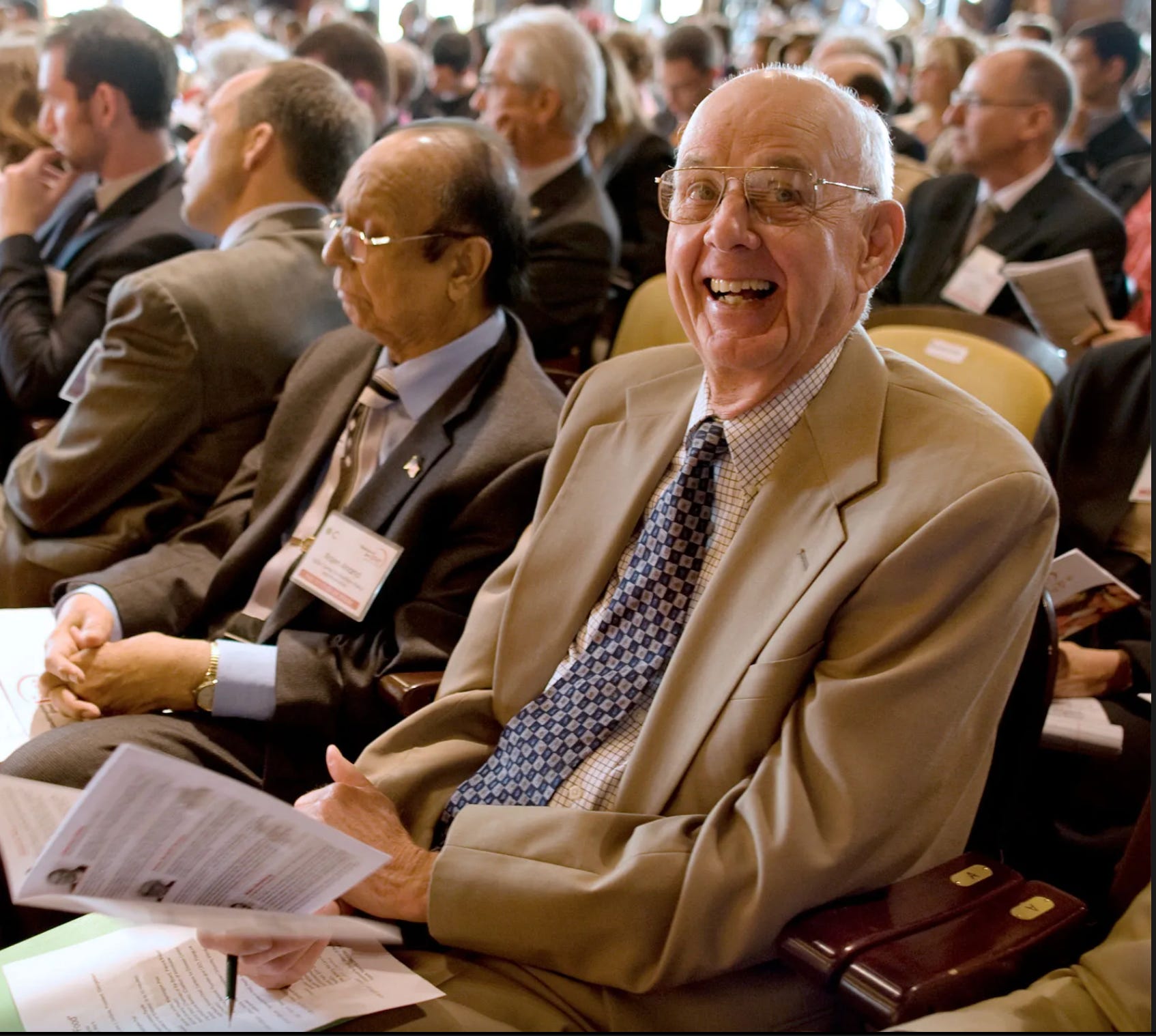
In 1977, Sierra Club Books published Wendell’s The Unsettling of America: Culture and Agriculture. In its opening lines, he notes, “As a people, wherever we have been, we have never really intended to be.” The yearning to be somewhere else—and the belief that by being there both life and we ourselves will be better—has worked like a disease that manifests itself in various forms of negligence, discontent, and destructiveness. Being unable or unwilling to cherish the places and communities we find ourselves in, we have also consigned them to ruin and ourselves to loneliness.
and
The whole of Wendell’s vast oeuvre (more than 50 books), whether in the form of poetry, essay, or fiction, can be read as a sustained, richly developed effort to remind people of their creaturely condition and to describe the practical requirements of a peaceable, even beautiful life with others. Sounds simple enough. The trouble, however, is that few people want to be creatures. They want to be gods who are exempt from the detailed, demanding work of care. They want to be free of the imperfections, neediness, and limits of embodied, entangled life with others and instead take up residence in a disembodied, ethereal heaven somewhere beyond the blue.
Jason Clark On Guardian Angels

A monk named Father Boniface had been teaching my friend Kristie about spiritual direction. Unable to keep it to herself, she told me, you need to hear what Father Boniface said.
Kristie asked him whether we have guardian angels. If we do, he replied, and their job is to protect us, they are doing a terrible job.
I laughed out loud.
He is right. If the angel’s job description is to keep you breathing, the results are pretty poor. People die all the time. Christians die. Good people die, at the wrong age, in the wrong way, with their prayers still going up to heaven. Angels have been relegated to tinsel on a tree, a silhouette on a card, a soft-focus figure at the shoulder of a sleeping child. Or as an emergency service, on call for the near miss on the motorway and irrelevant to everything else. We shrank them down until they fit in our hands as decorations, or in our pockets as lucky talismans.
Then Father Boniface said something stunning.
The angel is not guarding your life. The angel is guarding the story of your life in Christ.
I have not stopped thinking about this since Kristie told me.

I Can Run Faster than you

The spiritual life is learning to love the boring.
Anyone can fall in love with God at a camp, a conference, or a beautiful altar call. But as every seasoned believer knows, you must practice sustaining your desire to love and serve God in the mundane and monotony of the daily grind.
One has to stay in the pack, lock in, and keep going.
To “follow Jesus” involves a verb of forward motion, and we ought to learn to pace ourselves accordingly.

Post-Deconstruction Atonement via Julian
Richard Beck, self described de, then reconstructionist, therefore not prone to violence-enthused atonement theories reflects interestingly on Julian of Norwich’s medieval preoccupation with close and honestly stomach turning sufferings of Jesus and ponders what the necessity of the bloody spectacle might be;
Beyond a demonstration of God’s love for us, the agony of Golgotha also brings the severity of grace into view, a price that draws sorrowful attention to all the pain we have caused. This was the logic behind the sacrificial system in Leviticus in anticipation of Golgotha: the necessity to make sin visible. The visible horror of Jesus’s death brings the damage we have caused into clear, undeniable focus, prompting confession, repentance, and making amends. Without this costly display, grace would be reduced, as it often is, to a get-out-of-jail-free card. Evil would be trivialized. Our pardon would become a ready and easy excuse to move past everything we break in the world.
How you treat others, and yourself, is a grave and serious business. The severity of grace, its visible cost, makes this truth unavoidable. The bloody spectacle of Calvary is supposed to shock, disturb, and interrupt you. The tortured body of Jesus exposes our sin. The harm we have caused comes into view. In this bloody mirror we behold the horror of human evil and depravity. And standing at the foot of the cross, we confess how we have contributed our share. We recognize that we are complicit. We arrive at the moral pivot of our lives. Our stories turning at this precise moment.
Richard Beck — All Shall Be Wele

Antioch of Asia?

Amos Yong is a well known malaysian theologian who has been at Fuller for many years. I was interested by a report from his visit to Singapore and the reflections around theological education there. His cites a talk which reflected on singapore as the ‘antioch’ of the 21st century with a position to be able to interact between the historic christian west and the emerging majority church across asia.
SOT with its pentecostal summits, is now the nexus for a triadic theological-educational collaboration: with degrees offered by Alphacrucis in Australia, through faculty provided by Vanguard University in Southern California, and via the publication support of Regnum based at Oxford in the United Kingdom, perhaps not unsimilar to how Antioch of old became a leading site of patristic Christianity betwixt-and-between the apostolic center of Jerusalem, the ancient school of Alexandria in Egypt, and the western edge in Rome. If the Antiochene crossroads in the patristic period mediated ecclesial and theological exchange across the known ancient Christian world, what role might Singapore, particular in, from, and through this CHC-SOT matrix, also be exemplary as a significant church-based site of theological education for contemporary ecclesial renewal and revitalization not only through southeast Asia but also beyond?
Without You we are not able to please you
My 96 Year Old Spiritual Director, Yes that’s right, 96, often prays this prayer as we close our times. He will likely go to be with the Lord in the near future, but it will probably take me sometimes not to pray this prayer without his voice in my head. Not a bad legacy;
O God, because without you we are not able to please you, mercifully grant that your Holy Spirit may in all things direct and rule our hearts; through Jesus Christ our Lord, who lives and reigns with you and the Holy Spirit, one God, now and for ever. Amen.
That’s all for now…