
Let the word of Christ dwell in you richly, teaching and admonishing one another in all wisdom, singing psalms and hymns and spiritual songs, with thankfulness in your hearts to God.
— Colossians 3:16
“Singing together bears compelling witness to the truth. It says to those watching on and listening in that, just as we sing the same melody together, we share the same faith, the Faith; not a self-made creed for a solo journey toward nowhere, but commitment to our one Lord of all, who transforms the life we live together and will bring us home to eternity.”
― Keith Getty, Sing!
The more you think about the qualities of music, the more mysterious they seem. The more you consider music, the more divine it seems, but divine in a peculiar, Trinitarian, way. God is an eternal communion of Father, Son, and Spirit. God is one eternal choir in three voices. God’s life is a perfect harmony of Father, Son, and Spirit. The Trinity sings, is song.
— Peter Leithart

Welcome to Issue #99 of the Lectio Letter. This members-only newsletter is filled with music, film and food suggestions, links, and an article written by yours truly. If you happen to be new here, there’s a whole 98 other issues you can explore here!
Although I am not keeping up my two week schedule, these lectio letters are becoming increasingly "bumper additions" so I hope you can make time to read the article, enjoy the book recommendations and the various miscellaneous at the bottom of the email. (see the PSA, for why you might want to click through to read it online, as some email programs clip the email half way through.)
PSA: This email is LONG and due to some obscure technical reasons on Gmail it gets ‘clipped’, which means you are not seeing the whole thing.

You can see at the bottom of the email if it says “message clipped”, then click “View entire message” to see it all.

You are not getting it all if you don’t see my signature at the bottom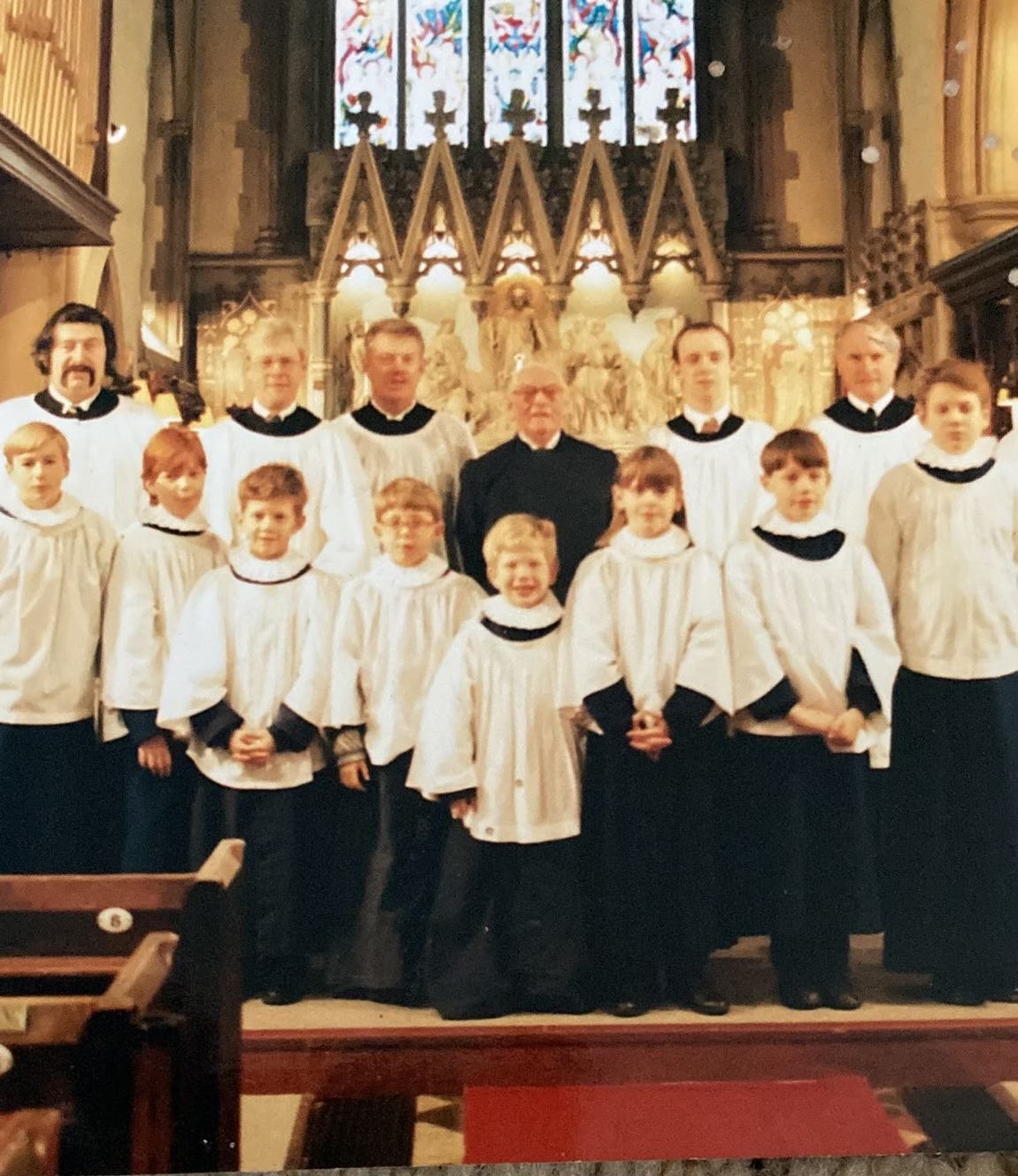
Don’t you recognise the blond hair of the boy in the middle? Yes, that me. A proto-anglican choir boy. While my interests are fairly varied, I have to admit that this 99th edition is an unexpected indulgence into my anglican past.
What began as an introduction to a few pieces of choral music that I have been listening to over the last few weeks unfolded into a longer reflection on the nature of our corporate worship and the virtues of congregational low-church singing versus traditional high-church choral music.
Status Board
Life

Life has been full, which of course is the marketing term for busy. But the rhythms of dog walks and in the case of the photo above, taking the dog to pee before bed, are anchoring in the midst of the ‘muchness’ and ‘manyness’ of life.
Siya is studying hard for IGCSE1 exams, we’ve been spending time with our friend Aya who has had some trips to hospital. We’ve found a new Sunday coffee spot. We’ve joined our weekly community ‘fun run’. We hosted a friend who works in Ukraine for a time of rest and reflection. Aaand, We’ve been running our weekly kids clubs. All good things as we race towards the (hopefully) slower pace of the Christmas break when many of our friends in Masi make the yearly pilgrimage back to they tribal homelands in the Eastern Cape of South Africa.


Reading
Liturgical Mission by Winfield Bevins

I am continuing to move through Bevan's liturgical mission. The real promise and opportunity of this book is connecting the churches worship to its missional life for the sake of the world. The best book I've previously read and recommended around that has been Dwell by Barry Jones.
The introduction is excellent in giving. brief overview of the ways these subjects have developed in recently history. I've been enjoying the book as I am now about 2/3rds through it, although there have been a few small places where I have gotten snagged.
For example Bevin's connects the Trinitarian understanding of “perichoresis” as connected to dance which in my understanding is not the etymological source of that very important word. Something like mutual indwelling/hospitality that affirms the significance of the other through space-making, seems like a more accurate connection. With that being said, it is a very good book and I am more than likely nitpicking due to my own aspirations for it too become the silver bullet of this connection between liturgy and mission.
How to Think by Alan Jacobs

I picked up this book again (after having read it in 2019) to revisit the idea of cognitive bias’, which is a way of talking about how our thinking is almost always going awry.
One of the realisations that came to me through beginning to read it again, was how inherently relational all of our thinking and opinion Holding truly is. We like to think of ourselves as rational independent thinkers when an actual fact the only way we change our mind is by imaginatively moving to another group on the other side of the room of our relational connections. But simply there is simply no one who holds an opinion that somehow doesn't put them in company with a group of imagined others. Therefore relational belonging under depends the conviction level to which we hold are so-called rational opinions. It's a short book and well worth your time.
The Possibility of Prayer by John Starke

This book has been staring at me from my shelf for a couple of years now and I’m so glad I finally read it.
The possibility of prayer has quickly risen to my “go-to” for an introduction to prayer which is an interesting thing given that I've read many books on prayer.
Many of those books in one sense are more practical, have more depth and yet what John Starke has done in this book is to frame things, in my opinion, just right.
Here is an introductory paragraph from the opening to part one.
"A vibrant prayer life as possible for you. I know it may not seem this way, but the whole thing is rigged for triumph. That doesn't mean prayer will be easy or comfortable. It won't. In fact, we should prepare for the long, slow haul of discomfort, confusion, and frustration, laced with joy, love, stability and harness. There aren't a few techniques nearly to pick up so that next week the struggle for prayer will be over. Instead, there are realities that we need to grasp that lead to pathways (rather than techniques) towards intimacy with God. These realities—like the incarnation of Christ, our participation in Christ exalted status, and his participation in our troubled and lowly place—rearrange how we think about ourselves, God, and the world around us. This often means on learning lies about ourselves, God, and the world that have driven how we've lived and made decisions so far in our lives. That will take time because it's not mainly changing our minds or our perspectives but growing up into who we are in Christ and embodying the truth.”
— The Possibility of Prayer, John Starke | p.9-10
This recognition of the need to move from simple techniques to reimagining the context within which we pray, for me, seems like what represents the hardest but most foundational transformation in understanding the role of prayer in the Christian life.
We are tempted to view prayer as a simple lever on the side of a slot machine named God and yet the invitation is far more relational. To participate with and come to know the One who has loved and found us in the messy broken world we live in and live out His love in every circumstance.
Starke unfolds the inner changes that take place in us through prayer and make prayer even enjoyable by overcoming our deeply utilitarian, outcomes-focused approach to prayer.
The second part of the book is interesting in that it actually isn't unpacking what most people expect as prayer but instead has a list of disciplines such as communion, meditation, solitude, fasting and feasting, Sabbath resting and corporate worship. The very fact that these are listed as the practice of prayer for Starke reveals his intention that our lives are made to become a prayer rather than solely focusing on the practice of sitting down folding our hands and shutting our eyes, as important as that is as he unpacks in chapter 2 of part one.
What pleasantly surprised me about this book are the places that John Starke goes to unpack the significance of prayer. The book was initially promoted within what I understand to be the fairly conservative Gospel Coalition and yet his end notes reveal extensive references to Henry Nouwen, Annie Dillard, Ignatius of Antioch, Hans Urs Von Balthasar, Eugene Peterson, David Benner, Athanasius, Ronald Rolheiser, and Robert Farrar Capon.
I heartily encourage you to read it.
Eating
Overnight Oats
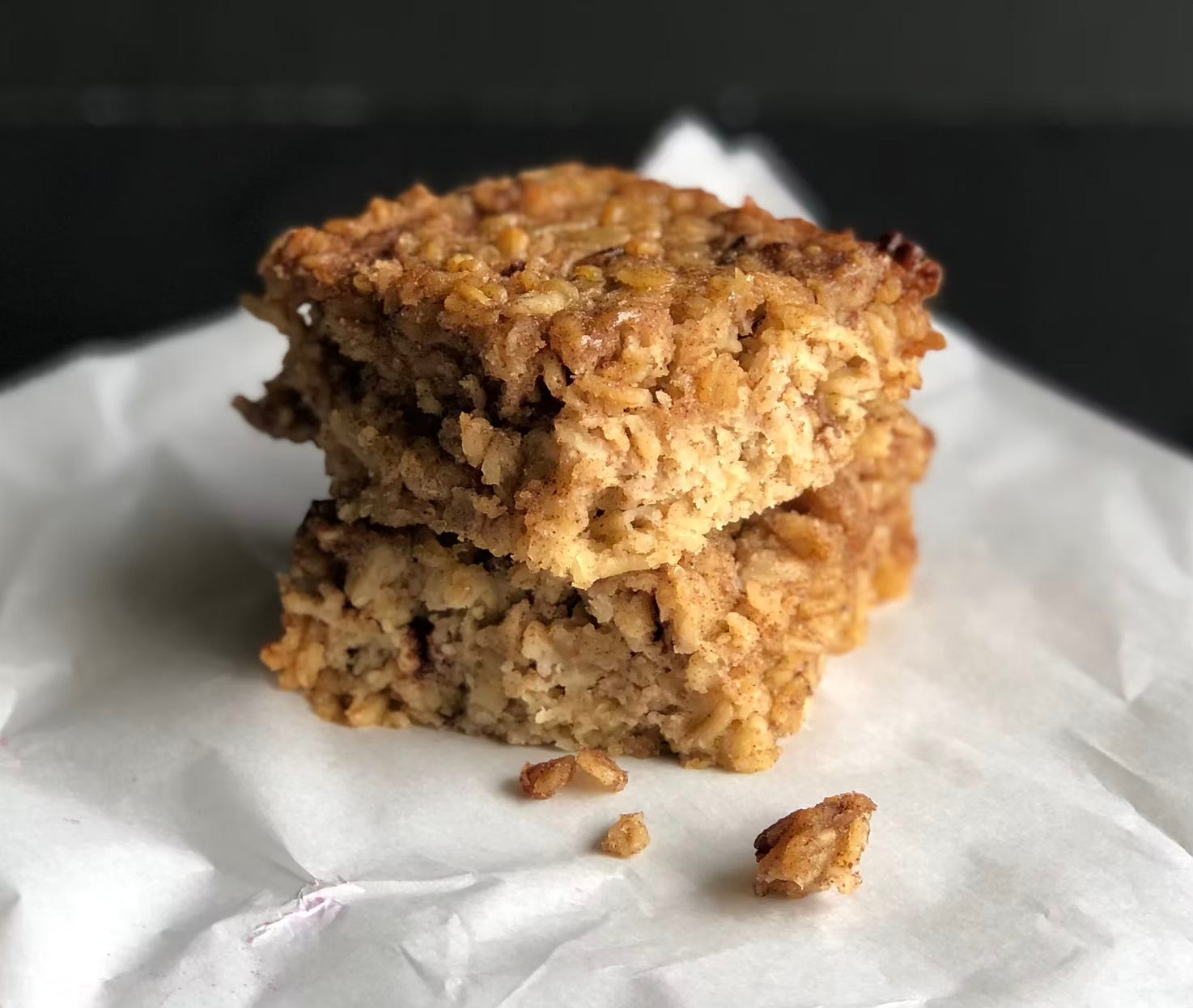
Rachel has a few times made these overnight oats made famous in our small world from my wonderful sister Bethany’s project - Community Eats. She is right
Ingredients
3 cups Rolled Oats
2 tsp Baking Power
1 tsp Sea Salt
1 tsp Cinnamon
1/4 cup Honey, Brown Sugar or Maple Syrup
1/4 cup Butter
1 1/2 cup Coconut Milk
1 tsp Vanilla
2 Eggs
Rachel adds frozen Blueberries which are delicious, but as you can see from Beth’s receipt there are multiple ways to ‘mix it up’.
Process
In an ovenproof serving dish mix together rolled oats, baking powder, sea salt and cinnamon.
Then in a saucepan, melt together honey, brown sugar or maple syrup and butter.
Into that whisk in coconut milk, vanilla and two eggs.
Pour the wet ingredients over the oat mixture and mix very well together.
Add in 2 cups of blueberries!
At this point you can place it the fridge overnight.
Bake 180C for 30-40 minutes.
This is great served with a spoonful of Thick Yoghurt spooned on top with a drizzle of honey and fresh berries.
Browning vs Cooking
Recently, I found a workaround to gain cheap access to YouTube premium. I was forced to do this after using a VPN which placed our network technically inside the UK, which then led to a vast array of adverts that were completely irrelevant to our lives. In South Africa!
I simply couldn't manage it anymore… but to justify this minor expense I have spent more time being led by the always creepily accurate algorithms of YouTube to some excellent cooking tutorials.
While a lot of cooking influencers rehearse the same ideas without really talking about why they work I've enjoyed the America Test kitchen's videos for both their length (normally within 20 minutes) and the explanation of some of the science behind why certain methods work.
Listening
A Short, pleasing guitar instrumental from Richard Houghten
Some nice sounds by Yuuf here (video starts at the song Alfa Cove);
Some more good jazzy sounds from South Africa;
A Haunting Hymnal
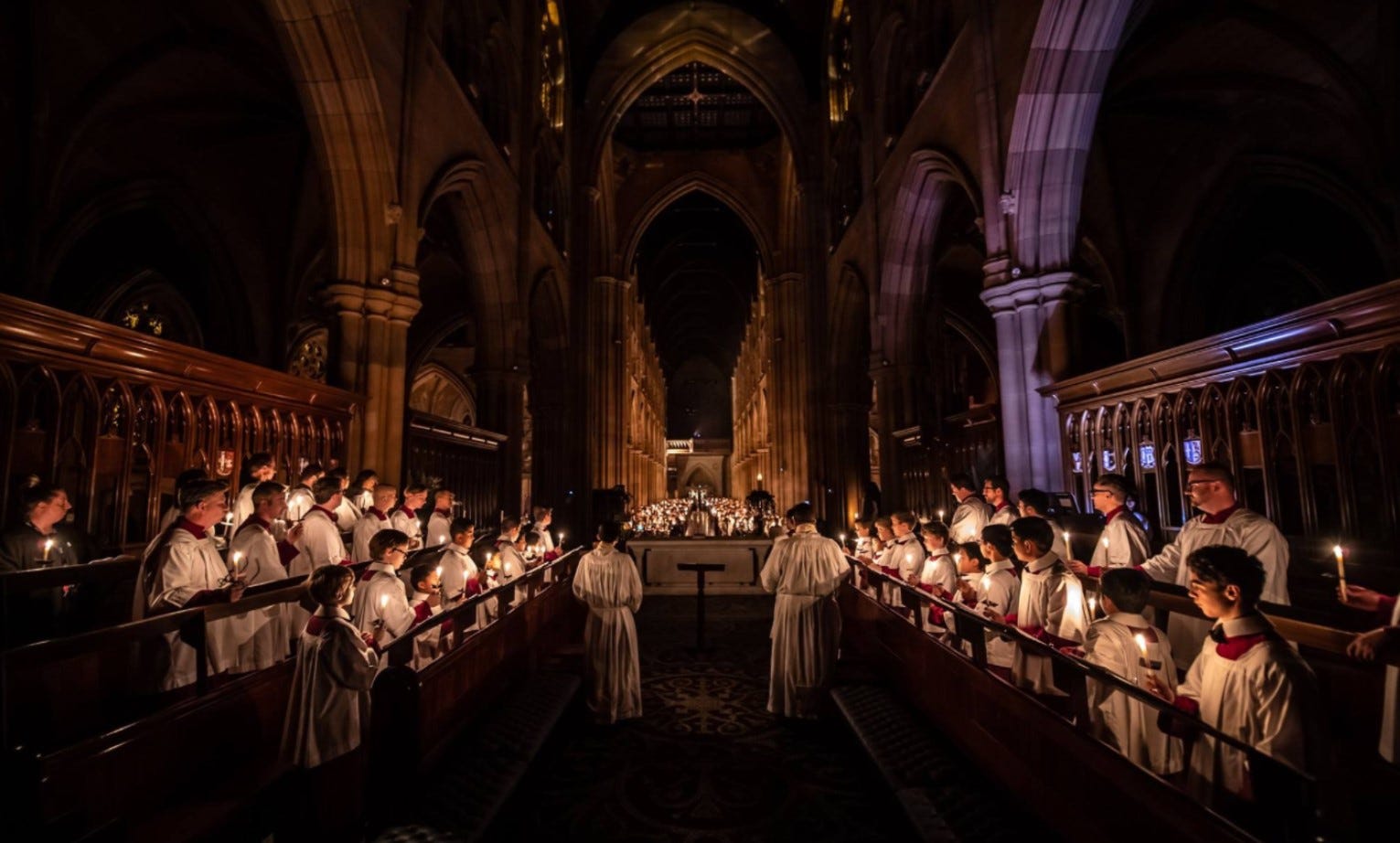
Since I was 16 years old, when I learned my first contemporary worship song on the guitar, I’ve led worship in Church and small groups. In fact, I got to know Rachel, my wife, through playing a worship band together in a church. So, if you play some late 90’s early 2000’s contemporary worship songs, I’ll likely stare off into the distance with a sentimental gaze.
But a number of years ago, I had an unnerving experience. An experience that reminded me of worship I experienced even longer ago than the 1990’s. We were in a church service led by our Xhosa friends in the township where we have worked for the last 16 years. We would sing songs in Xhosa, Chichewa (from Malawi) and Shona (from Zimbabwe). We knew most of the songs and they were sung in ragtag acapella.
There are maybe 100 such gatherings in this small community which, while holding at least 60,000 people, is confined by surrounding wetlands, settlements, and a major road to a space measuring around 5 miles square. That means on a Sunday, you are never more than 100 meters from a Sunday church gathering. Many of these churches sing the same songs despite ranging from, on one side, so syncretistic with Animism they are barely Christian, to the Baptist and Latter Day Saints whose gatherings are more reminiscent of their North American f(o)unders.
Haunted by a Choir in my memories
Without really noticing though, an Anglican church had begun gathering in a small building that shared a wall with our gathering. They have since built an impressive, if not blandly functional, building, but back then, they were gathered in what was essentially a lightly converted garage space.
When the singing on our side of the wall subsided, theirs continued, muffled through the double brick, but clear enough to make out. Something akin to the sound you can hear through a teenager’s bedroom door. Music just loud enough to make out but loud enough that anything short of bursting into the room would be unheard by the one inside.
In the quiet of our prayer and Bible reading, my subconscious started to be provoked. While the neighbouring congregation were singing in Xhosa, the melodies they were singing were reaching into the very depths of my memories with an arresting familiarity. You seen, my very earliest years were spent at the back of a 12th Century church building (which was the site of an earlier 7th century building) called St Winnow.

While I never held the memory of the words of these songs, sung as they were, over me and despite of my childhood disinterest, the melodies had worked their way somewhere deep within me. I was moved—haunted in fact, to a level that I had to restrain in order to remain present to the gathering I was attending. But in the years that followed, I have developed a less embarrassed affection for the choral music of traditional churches.
It could easily be argued that the melodies repeated approximately 35 years after I first heard them are testimony to an awkwardly post-colonial lack of contextualised mission. Blame it, as you may, on my rose-coloured and watery-eyed sentimentality, but in that moment I felt as if there was something holy happening. These simple melodies, repeated across decades and a nearly 6000 mile distance, were a sign and symbol of the unity of God’s people scattered, as they are, across tribes, tongues, and nation states. A Church which shares in the communion of the saints stretching back 2000 years and forward into as many generations as it takes before Jesus appears in Glory.
The Choral Medium as a Vision of the Church
Though many experience choral music as relic of the past in style, its very form embodies a sign and symbol of the Church’s true calling and identity. The amplification of much modern church music, which unintentionally elevates the professional musicians to the place of priests, who sing and play “on our behalf”, results in the congregation’s own wavering voices often being lost under the rehearsed cacophony of a P.A. System. While in theory affirming a ‘priesthood of all believers’, the mode of worship betrays a different message.

In contrast, Choirs in classical liturgical environments carry the congregation but don’t suppress their timbered offerings. Choirs, as a rule, don’t consistently fixate on the gift of a single singer. Instead their music is made beautiful exactly because the many parted harmonies incarnate the beauty in diversity inherent in God’s people. These many differently octave-abled image bearers bring their gifts together as one in praise of the God who made and sustains their lives.
In a way difficult to articulate, in that morning I spent overhearing Anglican hymns through a wall, I recognised that the melodies that had flowed unthinkingly over me as a disinterested primary school age child roughly colouring in cartoon bible stories papers, tied a thread. A Thread of God’s faithful salvation work in and through me to the day in which I was helping to plant a Church gathering in that Xhosa township in South Africa. A thread of the great gift of faith, glimpsing the faithfulness of God in catching up my childhood indifference and transforming it into a captivating love that has arrested and directed my adult life.

I’m sure, for some of you reading this, there is an adequate ‘flattened’ account of what happened in that haunting moment. But for me, the concertina of linear time was pushed together in much the same way as I anticipate the folding of time in the Eschaton. The collapsing and liberation of these long years into a moment by the One for whom a thousand years is as one day and who knows the Beginning from the End.
Of course all of this begs a series of more analytical questions: Is the symbol and sign embedded in the form of choral music enough to warrant it as inherently ‘better’ than contemporary praise and worship? The answer to that has to be No.
Would I be a follower of Jesus today if I had remained in that traditional liturgical setting? It’s hard to tell, but I am strongly inclined to say, almost certainly not.
Did my subsequent deeply significant times of being discipled in a Church focussed on expository explanations of the Bible make my adult faith possible? In my reflections, Certainly so.
Did my faltering yet sincere and heart felt attempts to play worship songs of my young adulthood form something liturgical worship could not do in that phase of my life? Again Yes (and I’ve written about that here).
But the points of resonance in this experience for me, was not comparing contemporary and traditional forms of worship and claiming one is better or than everyone should take the road back to Canterbury (as Robert Webber observed).
The latest developments in the Anglican communion are evidence enough that there is no greener grass across the traditional/contemporary denominational divides. The point I am reflecting is the great formative power in the styles and forms we worship in.
Roots, Repetition, and the Counter-Cultural Power of Tradition
As Marshall McLuhan is famous for saying “The Medium is the Message”. The forms of contemporary worship are marked by a desire to be resonant and accessible to a surrounding culture. Attractional churches are built on the idea of presenting an old message in a modern mode. The motivation here, generously thought of, is faultless.
But the practical challenge with incarnating forms of worship into culture is that you are always following the lead of the culture. The second and more insidious is that you end up following a culture drowning in consumption which requires novelty.
An endless fixation on new-ness keeps the systems of production alive and are justified with bumper stickers versions with out-of-context bible phrases like; “God is doing a new thing, don’t you perceive it” or “New wine into new wineskins”. I think these bible verses means something, but I don’t think they are a blanket endorsement for endless novelty. I think that the spirit of capitalist consumerism.

With all that said, I’m not arguing that choral music, in some way, fell from the sky. Many of the hymns choirs sing are drawn from the medieval period all the way through to the 19th Century. Not all old hymns are good, just as not all new contemporary songs are bad. But a good deal of the hymns choirs continue to sing have stood the test of time.
There is something more than familiarity and nostalgia which move people to sing songs they have sung all through their lives. In contrast to the endless consumption of surrounding culture, they have roots and represent stability. These two features are the most counter-cultural forms possible in a culture that is fixated on novelty.
Something about the medium of consistency and repetition over decades resonates deeply to a modern world which changes its phones, jobs and cars more often than most people in history changed their clothes. Newness, after all, can be exhausting, it becomes a cult of anticipation that never gets fulfilled. In a world of newness, roots and repetition can be rest.
Worship, Individualism, and the Story That Forms Us
Our modern western culture owes a lot to the enlightenment. While it is often referred to as the birth of rationalism, a counter movement arose shortly after which pulled on the other end of that rope, it was called romanticism.

Some of the earliest thinkers Voltaire and Rousseau affirmed the significance of ‘looking within’ for an ‘authentic truth’ based in ‘intuition and emotive responses’ and to not let those around you make any claim to what is true or desirable. Sound familiar?
Contemporary worship music in its content and form can play into this wider cultural inheritance from ‘romanticism’ which encourages introspection, individualism and a concern for interior emotional states. The lyrics are self-referential, individual and emotive while the trend in the worship spaces are to be plain and dark emphasising the congregants feelings of being solitary.
Jesus encouraged us when we pray to go and be alone and shut the door. I don’t think he imagined us creating corporate worship spaces where feel alone when we are together.
In contrast to this self-referential ‘authentic’ mode much choral music is drawn directly from scripture; places like the Psalms, the Song of Zechariah, and the Magnificat.
Here our emotional lives and all the other very relevant parts of who we are, are not turned towards a self-referential inner life, but for us to join ourselves to emotional contours of the people of God through the ages.
We learn how to feel our many emotions and turn to God through rehearsing the psalms. The Song of Zechariah teaches us what hope in God looks like and the Magnificat, how to be fully devoted to God’s counter-cultural coming Kingdom rather than our comfort and preferences.
So what does it all mean?
As I reflect on that profound moment overhearing choral melodies from my childhood I don’t it’s an either/or decision around abandoning contemporary forms of worship or nostalgically clinging to liturgical choral forms. Much of my life, contemporary worship has taught me to love Jesus with songs of devotion that connected to my lived experience. But at some point the well of authentic feelings offered to Jesus isn’t enough.
We all long to be grounded in the life of God that transcends our own small worlds, on a rock that is firmer and has stood the test of time and connects me to the people of God around, before and beyond me. If the medium truly is the message, then the Worshipping Church must take seriously the messages our worship forms communicate—about novelty or permanence, individualism or communion, introspection or shared hope.
And perhaps in rediscovering the harmonies that have carried generations before us we can be reminded that we belong to something stable, communal, and deeply rooted. Whatever worship forms we engaged in, may we do so with wisdom—seeking God with full hearts, alive minds and ready hands and not just be drawn to what is newest or most nostalgic, but instead, what trains us to love God and one another more fully, as one diverse people learning to sing the same story until He comes.
Miscellaneous Links
Christians need to be Weird
I’ve been really enjoying reading Jason Clark sharing in plain, accessible language things I’ve struggled to articulate as clearly. He begins by picking up the much referenced historian Tom Holland who unequivocally identified that the roots of the West are undeniably indebted to Christianity.

Holland via Jason Clark claims that
Christianity was “weird” because it claimed that:
God became human, and the crucified One rules the world.
The poor and powerless bear divine dignity.
Enemies are to be loved, not eliminated.
Forgiveness outranks revenge.
Reality is sacramental, not secular.
Every human—from womb to grave—is precious to God.
Resurrection is the true horizon of human hope.
Christian Cultural Engagement
With the increase of a kind of crude politicisation of Christianity, it’s worth having something of a simple map. While this Mere Orthodoxy maps things in a North American frame, it’s worth having some ‘options’ explained.

A Christological Anthology
Chris Green is running a mind blowing series on a Christological Anthology which is a great way to enter into a whole host of sources most are unfamiliar with.

He makes some really interesting points throughout this after quote Metz at length. But this section on ‘The Fear of the Lord’ was particularly interesting to me;
Years ago, at a conference where I had been speaking, someone observed that in all my talks I had made no mention of the fear of the Lord. I’m not sure he and I would agree on what is meant by that term, but I am sure he was right to ask why I had not addressed it, for we must live in that fear—exactly as Jesus did and does.
To be sure, it is that fear, Jesus’s fear, that we must live in—not another, not another’s. That fear is, as Isaiah declares, a gift of the Spirit (Isa. 11.1-3), perfected in Jesus by how he lived and died. As Aquinas recognized, the fear the Spirit gives us is not servile or even merely human—not the fear sons have of their fathers but the engodded and engodding fear the Son has for the Father, which has no terror in it. Aquinas makes thecrucial distinction: it is not fear of God in himself, not a fear of God’s nature or essence, but a fear from God that keeps us attached to him, an alertness to and readiness for him—our conductivity, we might say, to the Spirit’s electric current. Or, in Thomas’s own words, it is amenability to the motion of God (ST II.II.19.9). So, despite what we have sometimes imagined, the-fear-of-the-Lord (as Eugene Peterson helpfully rendered it) is the magnetic gift of God that makes it so that we can, if we want, stay with God no matter what happens—not losing contact or falling out of sync, but keeping step, keeping rhythm. Though it is not itself a virtue, it is integral to the virtue of hope, and both perfects it and is perfected by it (ST II.II.19.9).
What should we do ‘against the Machine’?
Paul Kingsnorth a writer and recent convert to Christian who I’ve mentioned before has compiled his thinking in to what is now a bestselling book; “Against the Machine”. I, like Miller and Bob, am very sympathetic to his concerns. The review below gives some reasons to wonder if there is a cure for the ills he so deftly describes.

The First Christian Martyrs
The Christian Story is a fantastic project which (a la Bible Project) is creating excellent animated videos which explain aspects of Christian History. It is backed by solid research and a heart for the church to catch a vision of the past for the sake of the future.
Can you drive west to lengthen the sunset
These random scientific explanation are just interesting enough to keep me engaged ;)
Fascinating Interview on Photographing Erupting Volcanoes
What was it like to stand that close when it actually erupted?
You feel it in your chest—a deep rumble, then an explosion that makes your ears ring. It’s dangerous and completely mesmerizing. Everyone edges closer even though your brain’s screaming don’t. It’s pure moth-to-flame energy.

“a religious event which eternally recurs every time it is accepted”
Alan Jacobs often finds ornate pieces of obscure (to me) writing by literary greats. This section from Auden writing to his father about his mediocre take on the Oratorio’s which were his literary presentations of the Gospel has a wonderful line in it.
Sorry you are puzzled by the oratorio. Perhaps you were expecting a purely historical account as one might give of the battle of Waterloo, whereas I was trying to treat it as a religious event which eternally recurs every time it is accepted.
I’m confident this is why observing the Christian calendar in some way can be so formative.
Stillness as Resistance

Finally, Richard Beck’s encouragement to aver ‘hot takes’ and simply refuse to be pulled in by the need to ‘do something’ is well needed advice.
He begins with
During times of great anxiety and uncertainty, when it seems like the fate of the world is hanging in the balance, there wells up within us a great desire to “do something.” And so we thrash around, giving our inner agitation an outlet. You see a lot of this happening on social media.
and closes;
Being still can be a profound act of resistance. We are surrounded by the crazed, anxious activity of others. Their panic is contagious, their fear infectious. Worse, they will shame you for staying still, denigrating your calm as wickedness and damning you for not “doing something” as the world burns.
But on the banks of the Red Sea, God fights for the still.
Worth the full read using the link above
That’s all for now…

I’ve been reading a devotional over Advent called The Dawn of Redeeming Grace by Sinclair Ferguson. This is his thoughts on the Fear of God which I loved.
‘It is the desire to live under God’s smile, and therefore to avoid anything that might cause him to frown….. ‘